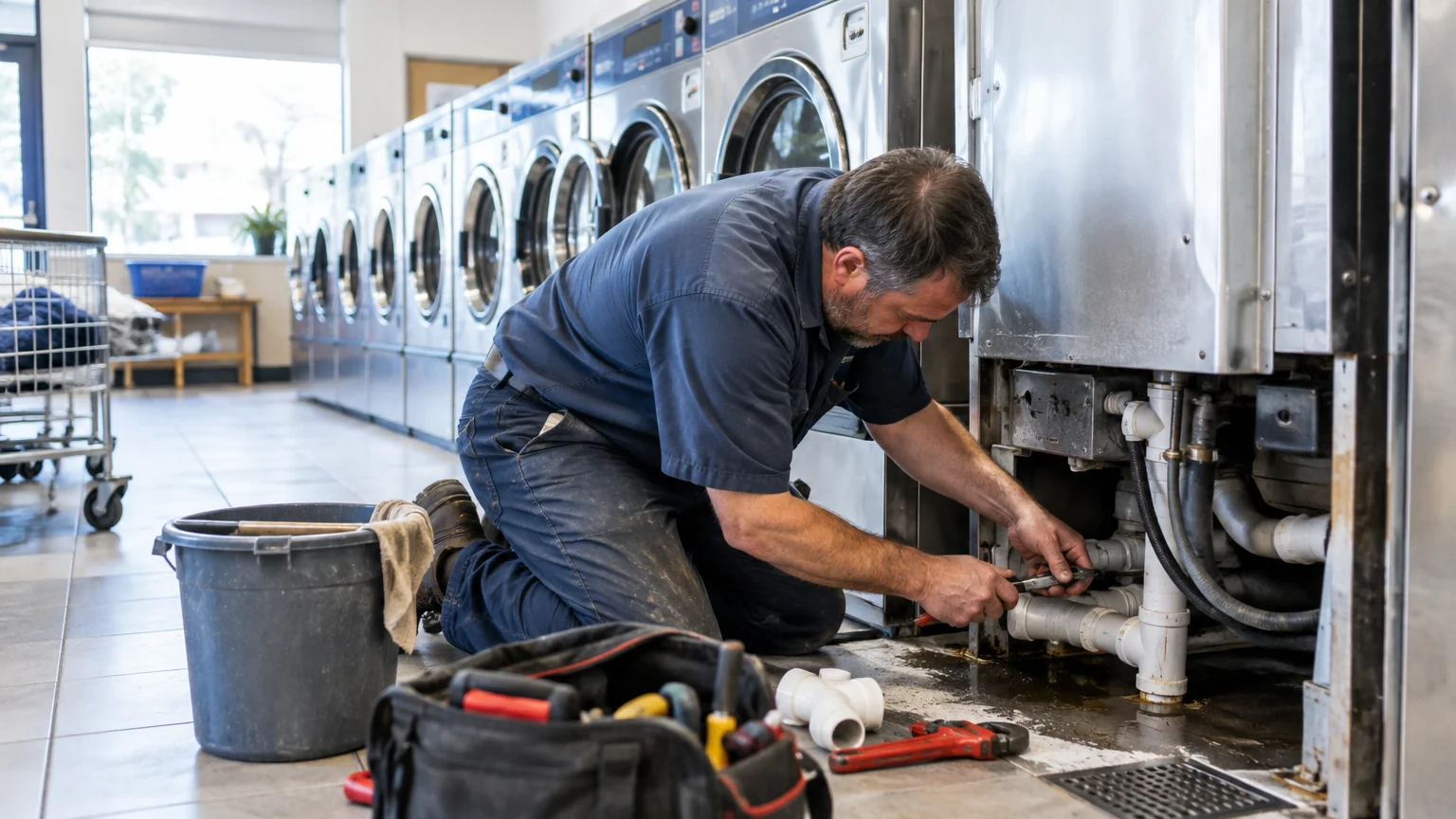
Laundromat plumbing problems often involve clogged drains, worn water lines, changing water pressure, or a failing commercial water heater. Heavy washer use can strain pipes and equipment throughout the day. Owners can limit service disruptions by watching for early signs, keeping drains clear, and arranging professional checks when trouble returns or affects several machines.
What plumbing problems commonly affect laundromats?
Laundromats use water all day, so one small plumbing fault may affect several machines. Common problems include slow drains, leaking supply lines, low water pressure, sewer odors, and water that does not stay at a steady temperature. The cause may be one washer, a shared pipe, or the building’s main plumbing system.
How do heavy washer loads strain drains and sewer lines?
Commercial washers send a large amount of used water into drain pipes during each cycle. When many machines run close together, shared drains must carry water from several washers at once. A drain line is the pipe that carries wastewater away from machines. If it is too small, damaged, or partly blocked, water may drain slowly or back up.
A washer that shakes or moves can also strain nearby hoses and pipe joints. Loose connections may begin to leak over time. Lint, loose items, and soap residue add to the strain if they enter the drain system. Owners can clean lint screens and keep machines level, following the equipment maker’s directions.
What causes leaks, pressure changes, and water supply interruptions?
Leaks may come from worn hoses, loose fittings, damaged shutoff valves, or rusty pipes. A shutoff valve controls water flow to a machine or part of a pipe. A leak beside one washer may come from its connection. Wet flooring near several machines may point to a shared line or a hidden pipe problem.
Low water pressure can come from a partly closed valve, a leak, mineral buildup, or an issue with the building’s water supply. If several washers fill slowly at once, the cause may not be one machine. Glen Allen Plumbing can help owners find out if a problem comes from a fixture, water line, drain, or heater. A sudden leak or strong sewer smell needs prompt attention.
Why do laundromat drains clog or back up?
Laundromat drains clog when lint, detergent, or other debris builds up inside pipes. A blockage may slow one machine or affect a shared drain serving several washers. Repeated backups need attention because wastewater can harm floors and equipment. They may also point to a deeper sewer line problem.
How do lint, detergent, and debris contribute to blockages?
Lint can enter a drain when screens are missing, damaged, or not cleaned. Detergent and fabric softener may leave residue that sticks inside pipes. Small items, such as coins or tags, can get caught in a washer drain or pipe bend. As this material builds up, wastewater has less room to flow.
Owners can clean lint screens and check visible washer areas when equipment is off and the maker’s directions allow it. They can also remove loose debris from floor drains if it is easy to reach. Do not use harsh drain chemicals in commercial equipment unless its maker approves them. These products may harm parts or fail to clear a deep blockage.
What warning signs suggest a drain or sewer line needs attention?
Slow drainage, gurgling sounds, water rising in a nearby floor drain, or a bad smell can point to a blockage. If the problem returns after a simple screen cleaning, the trouble may be deeper in the drain. When several washers are affected, a shared pipe may be the cause rather than one machine.
Owners can note which machines are affected and when the problem happens. This record can help a plumber spot a pattern, such as trouble during busy wash periods. A camera drain inspection uses a small camera on a flexible cable to view the inside of a pipe. This can help find a clog or pipe damage before opening the floor.
A sewage backup, water spreading across the floor, or wastewater entering a work area needs prompt plumbing help. Keep people away from affected water and stop using connected machines if safe. A plumber can check the drain and advise whether it needs repair or further cleaning. In Glen Allen, quick action can help limit damage to the building and equipment.
What causes laundromat water heater problems?
Commercial water heater problems can cause cold water, uneven temperatures, leaks, or service interruptions. The cause may be a failing heater, a faulty control, sediment buildup, a supply issue, or demand that is too high for the system. A licensed plumber can test the system and find which part needs attention.
Why might commercial washers receive water that is too cold or inconsistent?
Water may be too cold when the heater cannot keep up with demand, its settings are wrong, or a part is failing. A mixing valve can also change the temperature. A mixing valve blends hot and cold water to control the temperature delivered to equipment or fixtures.
If only one washer has a temperature problem, the cause may be that machine or its connection. If several washers have the same issue, the shared heater or hot-water line is more likely. Owners can check that the heater has power or fuel, look for an error message, and read the maker’s basic instructions. Do not remove heater covers or adjust gas parts.
A heater leaking from the bottom may have a loose drain valve, water from a nearby pipe, or a damaged tank. Water can travel along a surface, so a puddle may not show where the leak began. Turn off the water supply if the shutoff is easy to reach and safe to use. A gas smell is an urgent safety concern: leave the area and contact the gas utility or emergency services from a safe place.
When should a water heater be repaired or replaced?
Repair may make sense when a plumber finds one worn part and the main unit is still sound. Replacement may be the better choice when the tank leaks, the system fails often, or needed parts are hard to find. The plumber should consider the unit’s condition, the laundromat’s water needs, fuel source, venting, and local code rules.
Tank heaters store hot water in an insulated container. Tankless heaters warm water as it flows through the unit, but they still have limits. The right system depends on how many machines use hot water at once and the building’s setup. Glen Allen Plumbing can review water heater repair or replacement options for commercial properties and explain what the system can support.
How can laundromat owners prevent plumbing disruptions?
Regular checks can help owners spot small leaks, slow drains, or changing water temperatures before service is interrupted. Simple upkeep is often safe to do without a plumber. Work on gas lines, electrical parts, hidden pipes, and commercial heaters should be left to qualified professionals.
What routine checks help protect drains, water lines, and equipment?
A short inspection routine can help staff notice changes early. Owners can ask staff to check visible hoses, floors, drains, and machine performance during normal opening or closing tasks. Keep notes about repeat issues so a plumber can see when and where they happen.
- Clean washer lint screens as the equipment maker directs.
- Look for water around hose connections, valves, and machine bases.
- Notice slow drains, unusual sounds, or sewer odors.
- Check that floor drains have no visible debris.
- Record temperature changes and the machines affected.
These checks do not replace professional service. Staff should not reach into moving equipment, open heater panels, or try to clear deep blockages with tools. If a leak is near electrical equipment, keep clear and follow the site’s safety plan. Shut off water only if the valve is easy to reach and staff can use it safely.
When should a commercial plumber inspect the system?
Arrange a plumbing inspection when a drain keeps backing up, several machines have low pressure, leaks return, or hot water changes without a clear reason. A plumber can test water flow, inspect visible pipes, and decide whether a drain camera or heater check may help. Early diagnosis can limit damage and help owners plan plumbing repair around business needs.
In Glen Allen and the surrounding service area, a local commercial plumber can review whether the system suits the washer load and building layout. Glen Allen Plumbing can explain the findings and next steps after checking the affected plumbing. Seek emergency plumbing help for active flooding, sewage backup, or a suspected gas leak.
Key takeaways
- Heavy washer use can strain shared drains, water lines, and heaters.
- Lint, residue, and debris can slow drains or cause backups.
- Several affected machines may point to a shared plumbing problem.
- Owners can check visible areas and clean screens as directed.
- Recurring leaks, backups, or hot-water changes need professional diagnosis.
Frequently Asked Questions
Why does a laundromat washer drain slowly?
Lint, detergent residue, or a small object may block the drain. A shared pipe can also be partly blocked, especially when several machines drain through the same line. Clean the washer’s lint screen if the maker allows it. If the drain stays slow or other machines are affected, have a plumber inspect the line.
What should owners do if a water heater leaks from the bottom?
Keep people away from the water and check whether it may come from a nearby pipe or valve. If safe, turn off the water supply to the heater. Do not open the unit or touch wet electrical parts. Contact a plumber to find the source, since a leaking tank may need replacement.
Why is hot water inconsistent in a laundromat?
The heater may be struggling to meet demand, or a control, mixing valve, or hot-water line may have a fault. If only one washer is affected, check its settings and instructions first. If several machines receive uneven hot water, a plumber can test the shared system and heater.
When is a laundromat plumbing problem an emergency?
Active flooding, sewage backing up into the building, or a suspected gas leak needs urgent action. Keep people away from affected areas. For a gas smell, leave and contact the gas utility or emergency services from a safe place. For water or sewage problems, stop using affected equipment if safe and seek prompt plumbing help.
Conclusion
Laundromat plumbing problems can start with one hose, drain, or heater part. Shared systems can spread the impact across many machines. Routine checks help owners notice changes early, while repeated backups, leaks, and temperature problems call for a professional diagnosis. Contact us to have Glen Allen Plumbing assess your laundromat’s plumbing.
If you are not sure what you are dealing with, it is worth having someone look at it before it turns into a bigger job. Get in touch with Glen Allen Plumbing today and we will tell you where you stand.