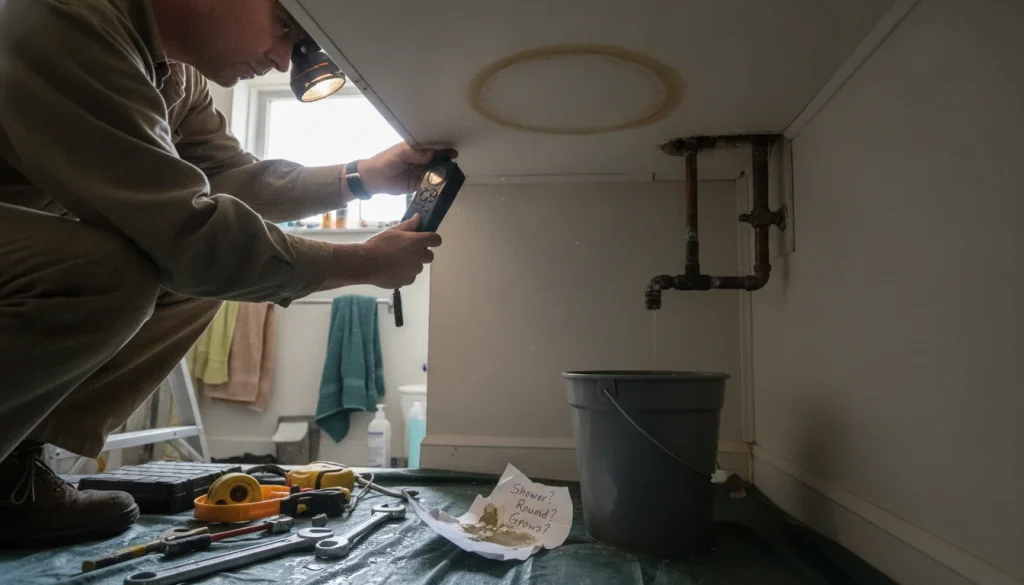
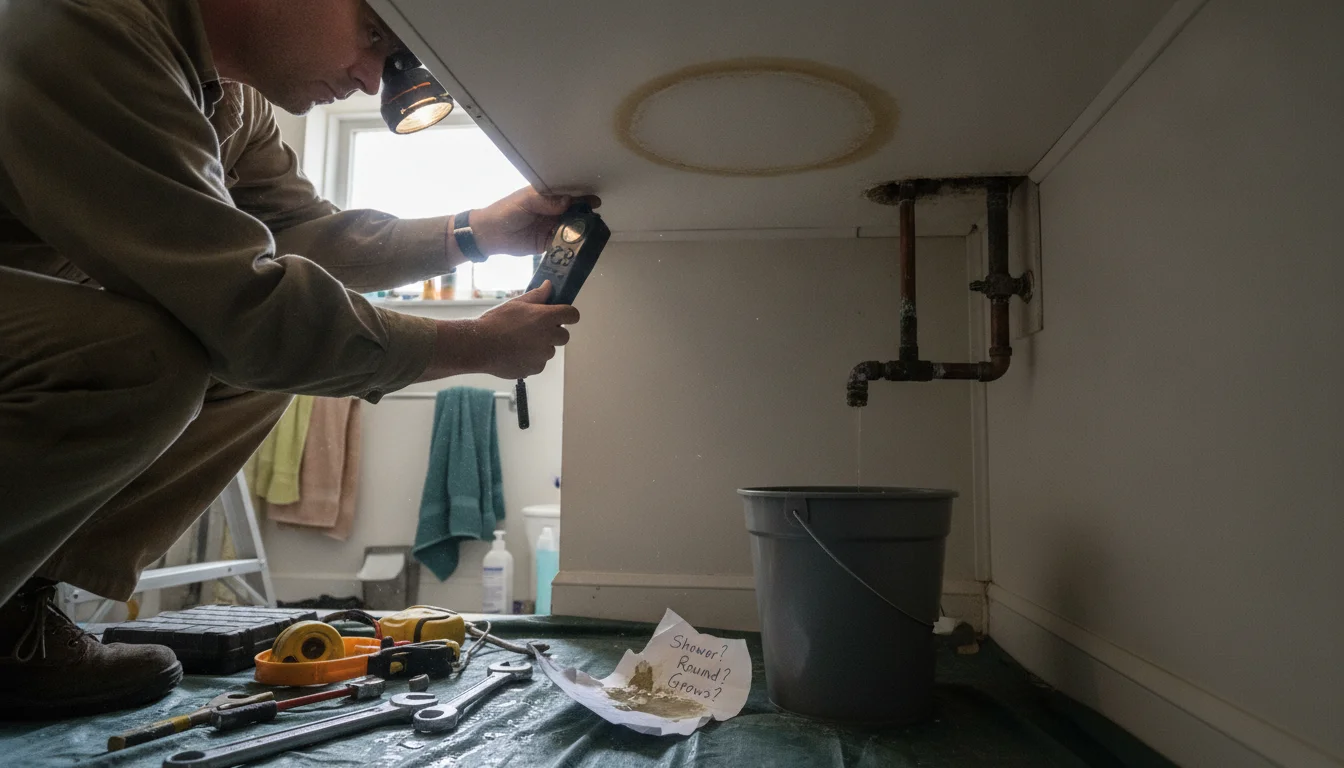
Hidden water leak signs include musty odors, peeling paint, warped floors, sudden meter movement, and new ceiling stains—quiet clues that water is getting where it shouldn’t. Spotting these indicators early limits mold, reduces structural damage, and speeds repairs. If you notice more than one sign, document them, perform a quick meter check, and plan next steps.
Living in Glen Allen, small stains or smells can be easy to dismiss—until they spread. This guide shows you how to read the early clues, verify moisture with simple tools, and decide when to bring Plumbing for skilled leak detection and lasting repair.
Table of Contents
- What are hidden water leak signs, and why do they matter?
- How can you tell there’s a leak behind a wall?
- What hidden water leak signs show up under floors?
- Are ceiling stains the only warning of a leak above?
- Which sounds and smells point to a concealed leak?
- Can your water bill or meter confirm a hidden leak?
- What health and safety risks come with hidden moisture?
- Which DIY tools and tests help locate hidden moisture?
- When should you call a licensed plumber—and what will they do?
- How do you prevent hidden leaks and limit water damage long-term?
- Frequently Asked Questions
- Key takeaways
- Conclusion
What are hidden water leak signs, and why do they matter?
Hidden leaks are water losses you cannot see at a glance. They lurk in walls, beneath floors, over ceilings, and under slabs. Early tells include damp, musty odors; bubbling or peeling paint; dark patches that return; cupped wood; and a spinning water meter when no fixtures are running. These clues indicate active water movement and need quick attention.
A hidden leak is any water escape from pressurized supply lines, valves, fixtures, or drains that doesn’t show directly on the surface. It can be slow, such as a pinhole in copper or PEX, or sudden, like a split hose to a washing machine. Slow leaks soak building materials over time—drywall softens, insulation holds moisture, and wood swells—creating ideal conditions for mold and decay.
Minor leaks often turn into larger problems because water follows gravity and wicks into porous materials, traveling far from the original source. A tiny drip can stain baseboards, loosen tile, or even corrode a GFCI outlet. Hidden issues show up in mixed ways: a musty hall closet, a warm patch on a slab, or a faint line in paint. Track patterns and recurrence, not just isolated events.
Why this matters: once materials are wet, damage accelerates. Mold can start to grow on damp drywall within a day or two. Structural members can weaken, floors can deform, and wiring can corrode. A small repair can quickly become a larger project involving demolition, drying equipment, and rebuilds. Fast action keeps the scope contained.
Note the signs, run a quick meter test, and call a licensed plumber if results point to ongoing flow. Glen Allen Plumbing works throughout Glen Allen handling emergency plumbing, leak detection, and pipe repair to stop damage where it starts.
What counts as a hidden leak and its early signals
Hidden leaks include pinholes in supply lines, failed valve stems, cracked fittings, sweating cold lines that wet nearby surfaces, and drain seepage at joints. Early signals are subtle: a faint stain that slowly expands, paint that lifts or blisters, grout that stays dark after hours, or flooring edges that lift.
How small leaks escalate into major damage
Moisture migrates, softens adhesives, feeds mold, and corrodes fasteners. Given time, minor cosmetic issues become structural repairs, which take longer to address and cost more to set right.
How can you tell there’s a leak behind a wall?
Wall leaks often leave surface clues first. Watch for paint that blisters, flakes, or separates. Drywall may bulge, get soft to the touch, or crumble at corners. You may see faint tan or brown rings that change after bathing, laundry, or dishwasher cycles. Baseboards can swell or pull away. In tiled bathrooms, grout that stays damp long after a shower is another sign.
Touch the suspect area. Is it cool or damp? A gentle press that leaves a dent suggests moisture inside the cavity. Slide a clean, dry tissue along the baseboard seam; if it picks up moisture, note the spot and timing. Track whether the stain grows after a specific fixture is used. Identifying patterns tightens the source zone.
Rule out surface condensation. Cold supply lines can sweat in humid spaces, wetting nearby drywall. Improve ventilation and see if the area dries within a day. If it doesn’t, suspect an internal leak.
Listen as well. A faint hiss can indicate pressure escaping from a small opening. A rhythmic drip can echo in a hollow wall. Turn off nearby fixtures and stand quietly. Mark where you hear sounds for reference.
Visual and tactile clues on drywall and paint
- Bubbling or peeling paint that returns soon after drying
- Soft drywall that dents with light finger pressure
- Linear stains that roughly follow studs or seams
- Swollen baseboards or small gaps at shoe molding
- Persistent grout discoloration near tub or shower surrounds
Simple shutoff and meter checks for wall leaks
Do a quick test:
- Turn off all fixtures and appliances that use water.
- Note the current position of the small leak dial on your water meter.
- Wait 20–30 minutes without using any water.
- Check the dial again. Any movement suggests ongoing flow.
- To isolate, close the home’s main valve. If the meter still moves, the leak sits between the meter and the house. If it stops, the issue is inside.
If the meter moves only when a specific valve is open (for example, the cold feed to a bathroom), the leak may lie along that branch. Share your observations with a licensed plumber for quicker diagnosis.
What hidden water leak signs show up under floors?
Floors can hide problems until they’re advanced. Water under hardwood can make boards cup or crown, open gaps, and crack finishes. Under tile, adhesive weakens and grout crumbles; tiles may sound hollow or come loose. With vinyl or laminate, edges can lift or bubble. A spongy or hollow feel underfoot often signals trouble below.
On concrete slabs, localized temperature changes are telling. A warm spot can indicate a hot-water line leak, while a cool, damp patch can point to a cold line. In quiet rooms, you may catch faint running-water sounds. Doors can begin to stick as subflooring swells. Rugs may stay damp at the edges even after cleaning.
In kitchens, dishwashers and refrigerators with supply lines are frequent sources. In bathrooms, a failing toilet wax ring can leak slowly and soak subflooring. Water tends to follow joists, so damage might show up one room away from the origin. If you know floor framing direction, use it to map likely flow paths.
Crawlspaces provide confirmation. Safely look under the suspect area with a flashlight. Drips on the underside of subflooring, damp insulation, and fresh mineral tracks on pipes are strong clues. Take care around wiring and avoid standing water.
Hardwood, tile, and slab indicators
- Hardwood cupping or crowning that doesn’t flatten with dry weather
- Loose or hollow-sounding tile and cracking grout lines
- Vinyl or laminate bubbles near sinks, refrigerators, or dishwashers
- Warm or cold spots on slabs that track along known pipe runs
Radiant heat and crawlspace red flags
Hydronic radiant systems can reveal leaks as uneven warmth, sudden boiler refill needs, or new slab discoloration. In crawlspaces, watch for active drips, rust on metal hangers, and damp or sagging insulation batts. Any of these warrant prompt inspection to prevent rot and mold.
Are ceiling stains the only warning of a leak above?
Ceiling stains are common but not the only early warning. You might first notice sagging drywall, bubbling paint, or seam lines printing through. Nail pops or hairline cracks that spread can also appear. In bathrooms, peeling around the exhaust vent can point to persistent dampness or a nearby slow leak.
Water may pool above the ceiling before it shows. Press gently near a stain with a knuckle; softness indicates saturation. Don’t puncture without planning—the water can release quickly. If you must relieve pressure to avoid collapse, set up a bucket first.
New stains after storms suggest a roofing issue. Stains that appear or grow after showers point to plumbing sources. Track timing carefully. If the mark develops after using fixtures, suspect piping; if it follows rainfall and shows trails along rafters, suspect roof or flashing leaks.
In multi-story homes, check the room above for loose supply lines, failing caulk, or laundry overflows. Even small drips over time can create wide stains below.
Sagging drywall, bubbling paint, and seam lines
- Sagging, pillowy drywall that hints at pooled water
- Paint bubbles that return shortly after drying
- Sharp seam lines where joint tape lifts or splits
- Rust or discoloration at ceiling fixtures such as fans or recessed lights
Attic clues and telling roof vs. plumbing leaks apart
In attics, look for wet sheathing, rusty nail points, or damp insulation. Roof leaks often leave dark trails moving from higher to lower areas. Plumbing leaks usually appear near vent stacks or directly under bathrooms. Round stains that grow after a shower generally indicate plumbing; streaks that follow framing after rain suggest a roof source.
Which sounds and smells point to a concealed leak?
Your nose and ears are valuable tools. A new musty odor in a closet, bathroom, or under a sink can be the first sign. “Musty” typically means mold is consuming wet material. If smells intensify after running a shower, dishwasher, or washing machine, focus on those lines. Odors that persist after thorough cleaning point to hidden moisture.
Listen for dripping, hissing, or a faint running-water hum when no fixtures are on. Drips echo within wall cavities and ceilings. Hissing often indicates pressurized leaks on supply lines. A low whoosh near a slab can hint at a broken pipe under concrete.
Drain odors can confuse diagnosis. Sewer gas has a sulfur-like smell and usually relates to vent or trap problems rather than a fresh water leak. However, a failed toilet wax ring can leak both water and sewer gas; treat either as urgent.
Mold growth may show as scattered speckles on paint, dark patches on caulk, or fuzzy areas on drywall. Hidden mold still releases spores and volatile organic compounds (VOCs)—gases from molds and building materials that can irritate eyes and lungs. Reducing moisture is the permanent solution.
Dripping, hissing, and running-water noises
- Dripping in walls or ceilings after fixtures are turned off
- Steady hissing from pressurized line leaks
- A running-water hum at the meter with no water use indoors
Musty odors, mold growth, and VOCs
A persistent musty smell, visible mold spots, or headaches that ease outdoors can trace back to hidden moisture. Air out the area, find and fix the water source, and dry materials thoroughly to stop growth.
Can your water bill or meter confirm a hidden leak?
Yes. The water meter is a reliable truth teller. When no one is using water, the meter should be still. If it moves, water is flowing somewhere. Many meters include a small leak indicator that spins with even tiny flows. A slow, steady spin indicates a constant leak.
Your bill can provide clues as well. Look for usage rising month to month without a clear reason. Seasonal changes explain some variation—summer irrigation often increases consumption—but unexplained winter increases indoors aren’t typical. If possible, compare the same month year over year to spot anomalies.
Meters can help isolate problems. Close valves to suspect fixtures and watch the leak indicator. If it stops, that branch likely has the issue. Toilets are common culprits, followed by hose bibs, ice maker lines, and water heaters.
Step-by-step water meter test
- Turn off all indoor and outdoor water use.
- Locate the leak indicator on your meter and note its position.
- Wait 20–30 minutes without using water.
- Recheck the indicator. Any movement signals a leak.
- To confirm the zone, close the main shutoff to the home. If the meter still moves, the leak is in the service line from the meter to the house. If it stops, the leak is inside the home.
Reading bill patterns and seasonal usage
Scan for sudden spikes unconnected to guests or new appliances. Match higher use to known events such as lawn watering. If elevated usage persists across seasons, a hidden leak is likely. Share a usage history with your plumber; it can speed up the find.
What health and safety risks come with hidden moisture?
Hidden moisture damages buildings and affects health. Mold thrives on damp drywall and wood. It can trigger allergies, aggravate asthma, and irritate eyes and skin. Children, older adults, and people with respiratory conditions tend to feel effects first. The best defense is to keep materials dry.
Indoor air quality declines when mold grows or materials stay wet. Odors linger, and VOCs from damp materials and mold add to the burden. Fresh air helps, but stopping the water and drying the structure is essential. Fans alone are not a cure; the source must be fixed.
Wet areas also create slip hazards. Water on tile or vinyl can be hard to spot until someone steps onto it. Towels are only a short-term measure—find and fix the leak to prevent injuries.
Water and electricity are a dangerous combination. Moisture at outlets, junction boxes, or light fixtures can cause shorts or shocks. If you suspect water intrusion near electrical components, turn off power to the affected circuit at the breaker and get a professional evaluation before restoring power.
Over time, wood rot and corrosion weaken building supports. Joists, subfloors, and studs can lose strength. Metal connectors and nails can rust. Early drying and timely repair prevent larger structural work later.
Mold exposure, allergens, and indoor air quality
- Allergy flare-ups or musty odors that follow water use
- Visible mold spotting or black/green staining on walls or ceilings
- Persistent humidity that does not respond to normal ventilation
Electrical hazards, rot, and slip risks
If water appears near outlets or light fixtures, turn off power to that circuit. Use caution around wet floors. Arrange professional leak detection, drying, and repairs to restore safety.
Which DIY tools and tests help locate hidden moisture?
Homeowners can run a few safe checks. A basic moisture meter can scan drywall, baseboards, and trim; readings that jump higher than nearby areas mark likely wet zones. A simple infrared thermometer can reveal cooler spots from evaporation or warmer patches over hot-water line leaks.
Dye tablets or food coloring help test toilets for silent leaks. Place a few drops in the tank; if the bowl picks up color without a flush, the flapper leaks. You can also use “salt paper” (plain tissue sprinkled with table salt) at baseboards; salt clumps when damp, highlighting a leak path.
A pressure test with a gauge and pump is best handled by a licensed plumber. DIY pressure testing can damage lines if done incorrectly. Leave full-system pressurization and isolation to pros.
Thermal imaging is useful but requires interpretation. Cold exterior air can mimic a wet spot on a scan. Validate any temperature anomaly with a moisture meter. Mark readings and compare with known dry areas for a clearer picture.
Moisture meters and basic infrared checks
- Moisture meter: compare suspect areas to nearby known-dry surfaces
- Infrared thermometer: find hot or cool anomalies aligning with pipe runs
Dye tablets, pressure tests, and salt paper
- Toilet dye test: quick check for silent leaks
- Salt paper at trim: simple detector for dampness at edges
- Pressure testing: ask a licensed plumber for safe, accurate results
When should you call a licensed plumber—and what will they do?
Call a licensed plumber when you have more than one sign at once, any meter movement at rest, active drips, ceiling bulges, or odors that linger. Also call quickly if water approaches electrical components, if floors feel soft, or if you’re facing an urgent burst. Delays increase the repair scope.
Expect a few questions to streamline diagnosis: when you first noticed the problem, whether changes occur when certain fixtures run, and what your meter test showed. Photos and notes shorten the search.
Pros use methods that minimize damage. Acoustic listening tracks leak sounds in walls. Thermal imaging identifies temperature shifts. Moisture mapping shows spread patterns. For slab leaks, line tracing and pressure isolation narrow the zone. Sometimes a small, targeted opening confirms the exact point.
Repairs depend on cause and access. Pinholes in copper can be cut out and replaced, and older sections may be repiped. PEX or copper is used per code and need. For drain issues, joints or traps may be rebuilt. After repairs, drying equipment—air movers and dehumidifiers—returns materials to safe moisture levels.
Service options include Emergency Plumbing for urgent bursts, Leaks & Burst Pipes for detection and repair, and Water Heater Repair when hot-water lines or tanks leak. For safety with appliances, Gas Line Plumbing ensures code-compliant work.
Urgent thresholds and decision points
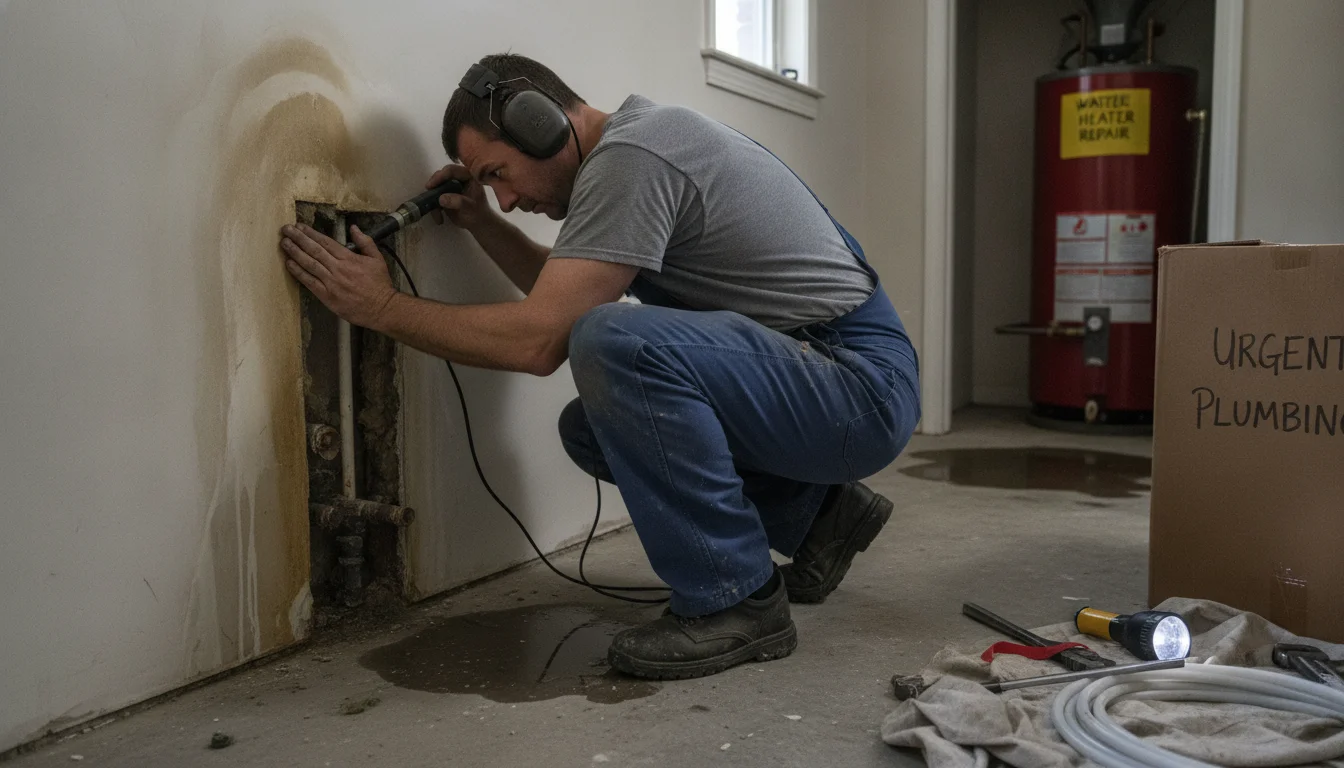
- Any ceiling sag or active drip: urgent
- Meter spins with all fixtures off: call soon
- Water near outlets or panels: cut power and call now
Professional leak detection methods and repairs
Expect non-invasive tools first, small targeted openings only when needed, and a clear explanation of the repair plan. Pros verify the fix with testing before any close-up or restoration work.
How do you prevent hidden leaks and limit water damage long-term?
Prevention begins with routine checks. Look under sinks monthly and feel for dampness. Inspect around toilets, tubs, and showers. Watch for slow drains that might force water into places it shouldn’t be. Replace aging supply lines with braided stainless hoses. Add shutoff valves where they’re missing to make future isolation simpler.
Keep water pressure in a safe range. High pressure stresses pipes and fixtures. A plumber can test and, if needed, install a pressure-reducing valve. Insulate pipes in unconditioned areas to prevent winter bursts. Seal wall and floor penetrations to reduce condensation on cold pipes.
Choose quality materials during updates. Use rated valves, fittings, and approved pipe types. Set water heater temperatures to safe levels to protect lines and minimize scald risk. Service heaters per manufacturer guidance to reduce tank leaks. If your property has historically troublesome piping, plan a preventative repipe rather than waiting for failures.
Document any issues for insurance. Take clear photos of damage, meter tests, and repairs. Keep receipts in one place. Make sure everyone in the home knows where the main shutoff is and how to use it. Build a straightforward plan for bursts: shut water, move valuables, and call for help.
Maintenance checklist and better material choices
- Monthly checks beneath sinks and around appliances
- Annual inspection of supply lines, valves, and water heater
- Replace worn hoses with braided stainless
- Insulate pipes in attics, crawlspaces, and exterior walls
Insurance documentation and emergency readiness
Keep a folder with photos, notes, and invoices. Mark the main shutoff. Store towels, a flashlight, and a basic tool kit in one spot. Quick, organized action limits damage.
Frequently Asked Questions
What should I do first if I find a new ceiling stain?
Shut off water to fixtures above the stain if possible. Place a bucket under any sag. Avoid puncturing without a plan. Run a quick meter test to check for hidden flow. If the stain grows or the meter moves, call a licensed plumber for leak detection.
How can I tell if a toilet is leaking without tools?
Put a few drops of food coloring or a dye tablet in the tank. Wait 10–15 minutes without flushing. If color shows up in the bowl, the flapper leaks. Silent toilet leaks are common hidden water leak signs and can increase your bill.
Are musty odors always from a water leak?
Not always. Humidity, poor ventilation, or aging carpets can smell musty. But a new musty odor near walls, closets, or bathrooms often points to hidden moisture. Use a moisture meter on trim and drywall to compare readings. If they’re elevated, investigate further.
Can a water heater cause hidden leaks?
Yes. Tanks can seep at fittings, valves, or the tank body, and small leaks may disappear into the pan. Watch for rust streaks, damp pans, or clicking sounds. Water Heater Repair can address tank or connection issues before they grow into major problems. If an aging unit is failing, consider water heater replacement to reduce recurring leaks.
Who should I call for a burst pipe emergency?
Call a licensed plumber that offers Emergency Plumbing service. Shut off the main water valve first, then open a faucet to relieve pressure. Move items away from the leak. Pros can stop water, repair lines, and set up drying to protect your structure.
Key takeaways
- Early clues matter: stains, smells, sounds, and meter movement point to leaks.
- Simple tests help: shutoffs and meter checks can confirm hidden flow.
- Act fast: quick response limits mold, rot, and repair scope.
- Pros have tools: non-invasive detection finds sources with minimal disruption.
- Prevention works: routine checks, better materials, and clear plans reduce risk.
Conclusion
Hidden leaks start small but can impact your property quickly. Use the guidance here to spot trouble early, verify with simple tests, and bring in a licensed pro to confirm and fix the source. For trusted local help Glen Allen Plumbing is ready to find the problem, protect your structure, and restore safety. Contact us.
If you are not sure which of these you are dealing with, it is worth having someone look at it before it turns into a bigger job. Get in touch with Glen Allen Plumbing today and we will tell you where you stand.