Restaurant drain clogs often start with grease, food scraps, soap, or dirt entering kitchen pipes. Restaurant drain clogs can be reduced with drain screens, daily cleaning, proper waste handling, and planned commercial drain cleaning. Slow flow, bad smells, gurgling, and backups may show a deeper drain or sewer issue.
Table of Contents
- Why do restaurant drains keep clogging?
- What causes grease to harden inside commercial drain lines?
- Which restaurant drains are most likely to become blocked?
- What are the warning signs of a restaurant drain problem?
- How can restaurants prevent recurring drain clogs?
- How often should commercial restaurant drains be cleaned?
- When should a restaurant call a licensed commercial plumber?
- Frequently Asked Questions
- Key takeaways
- Conclusion
Why do restaurant drains keep clogging?
Restaurant drains keep clogging because commercial kitchens send more waste through pipes than most homes. Grease, food scraps, starch, soap, and dirt can stick to pipe walls. The opening gets smaller over time, so water drains slowly and a full blockage can follow.
How grease, food waste, and debris build up
Small scraps can pass through a sink during a busy shift. Rice, pasta, flour, coffee grounds, vegetables, and meat waste may settle inside bends. Grease then coats these scraps and holds them together. This makes a thick mass that water cannot move well.
Drain screens catch larger scraps before they enter the pipe. Staff should scrape plates into trash or approved food-waste bins first. Sinks should not be used to wash large amounts of food away.
Why high-volume kitchen operations increase blockage risk
A restaurant may use many sinks, dishwashers, floor drains, and prep stations each day. Every fixture sends water and waste into the drainage system. A pipe that works well in the morning may struggle after hours of heavy use.
Old pipes, poor pipe slope, damaged joints, and shared sewer lines can make clogs worse. Glen Allen Plumbing can help restaurant owners find the likely source instead of treating only the visible symptom. Drain cleaning may clear buildup, but repeat clogs often need a wider check.
What causes grease to harden inside commercial drain lines?
Grease hardens when fats, oils, and grease cool inside a drain line. It may flow as a liquid near a hot sink, then stick to colder pipe walls farther away. More waste can attach to that layer until water has little room to pass.
How fats, oils, and grease affect pipes
Fats, oils, and grease are often called FOG in commercial plumbing. FOG includes cooking oil, meat fat, butter, sauces, and oily food scraps. It coats the inside of pipes and reduces the space available for water.
Grease can also collect in traps, bends, and low spots. A grease interceptor is a tank that separates grease from wastewater. Poor cleaning, wrong size, or poor care can reduce how well it works. A neglected interceptor may let more grease reach the main drain.
Why hot water does not remove grease permanently
Hot water may move soft grease for a short distance. It does not remove grease from the whole system. As the water cools, grease can stick to another part of the pipe. Repeated flushing may only move the problem farther down the line.
Dish soap may break up some surface residue, but it is not a full drain treatment. Restaurants should collect used oil and grease in approved containers. Staff should never pour cooking oil, sauces, or thick food waste into sinks. Chemical drain products may harm pipes, workers, or treatment systems when used without proper guidance.
Which restaurant drains are most likely to become blocked?
Kitchen sinks, floor drains, dishwashing areas, and main sewer lines face high blockage risk. Each area receives different waste. All can become blocked when food, grease, or dirt enters the wrong drain.
Kitchen sinks, floor drains, and dishwashing areas
Three-compartment sinks and prep sinks often collect food particles and grease. Dishwashing areas may receive detergent, starch, and loose scraps. Floor drains collect mop water, dirt, broken food pieces, and grease from spills.
A floor drain may have a trap that holds water and blocks sewer gases. If the trap is dirty or dry, bad smells may enter the building. Staff can remove visible debris from a drain cover and rinse the area safely. They should not reach into a deep drain or use harsh chemicals without instructions.
Main sewer lines and shared commercial plumbing
A blockage beyond one fixture may affect several sinks or floor drains. This can point to a branch line or main sewer line problem. Shared commercial plumbing may also carry waste from another tenant or food service area.
When many fixtures drain slowly at once, one small sink clog is less likely. A Sewer Backup Plumber may need to inspect the line with professional tools. Sewer Line Repair may be needed when roots, broken sections, crushed lines, or heavy deposits cause repeat failure.
What are the warning signs of a restaurant drain problem?
Warning signs include slow drainage, bad smells, gurgling, standing water, and repeat backups. Staff should record these signs and report them early. Quick action may limit water damage and reduce service problems.
Slow drainage, odors, gurgling, and recurring backups
A slow sink may have buildup near the trap or farther along the branch line. A bad smell may come from trapped food, grease, a dry trap, or sewer gas. Gurgling can happen when air moves through a partly blocked pipe.
Staff should note which fixture has trouble and when it happens. A clog that appears during peak service may show limited pipe capacity. A backup that returns after simple cleaning suggests waste remains in the line. It may also point to a deeper pipe problem.
When a minor blockage may indicate a sewer line issue
One slow sink does not always mean a main sewer problem. Several affected fixtures, wastewater on the floor, or sewage from a floor drain needs quick attention. These signs may mean the blockage is downstream from individual fixtures.
Businesses should stop using affected fixtures when wastewater rises. Keep staff and customers away from dirty water. Do not mix drain chemicals or enter a confined space to inspect a sewer line. Emergency Drain Cleaning may be needed when a backup threatens health, equipment, or business operations.
How can restaurants prevent recurring drain clogs?
Restaurants can prevent many repeat clogs through staff training, waste control, drain screens, and planned care. Prevention works best as part of daily closing duties. It should not begin only after a backup occurs.
Daily kitchen practices and staff procedures
A simple routine can reduce waste entering the plumbing. Managers should train every shift and check that the process continues during busy periods.
- Scrape plates and pans into the proper waste bin before washing them.
- Wipe oily cookware with an approved absorbent material before rinsing.
- Keep drain screens in place and empty them into trash often.
- Store used cooking oil in approved containers for proper collection.
- Clean sink basins, strainers, and floor drain covers after each shift.
- Record slow drains, smells, backups, and repeat trouble spots for managers.
Most trained staff can safely handle these cleaning and waste steps. They do not replace professional work on a blocked main line, damaged pipe, grease interceptor, or dirty backup.
Drain screens, grease interceptors, and proper waste disposal
Drain screens catch larger material before it reaches the pipe. Grease interceptors separate grease from wastewater, but they still need proper use and regular care. Their size, design, condition, and cleaning needs depend on the building and local rules.
Managers should follow the equipment maker’s directions and local requirements. Staff should not remove a screen during busy service just to make water drain faster. That choice may send waste into a harder-to-reach section of the system.
How often should commercial restaurant drains be cleaned?
Commercial restaurant drains should be cleaned based on use, waste levels, pipe condition, and past clog history. No single schedule fits every kitchen. A busy restaurant with repeat grease trouble may need more frequent service than a low-volume food business.
Factors that determine a suitable cleaning schedule
A plumber may look at meals served, cooking type, grease use, pipe age, and drainage layout. The condition of traps, grease interceptors, and sewer connections also matters.
A good maintenance record should list each cleaning date, affected fixture, waste found, and change in flow. If the same line blocks again soon after service, this record can help find the deeper cause.
Why preventive maintenance is different from emergency clearing
Emergency clearing restores flow after a blockage. Preventive maintenance removes buildup before it stops normal work. A planned visit may allow safer work, better timing, and a closer look at the system.
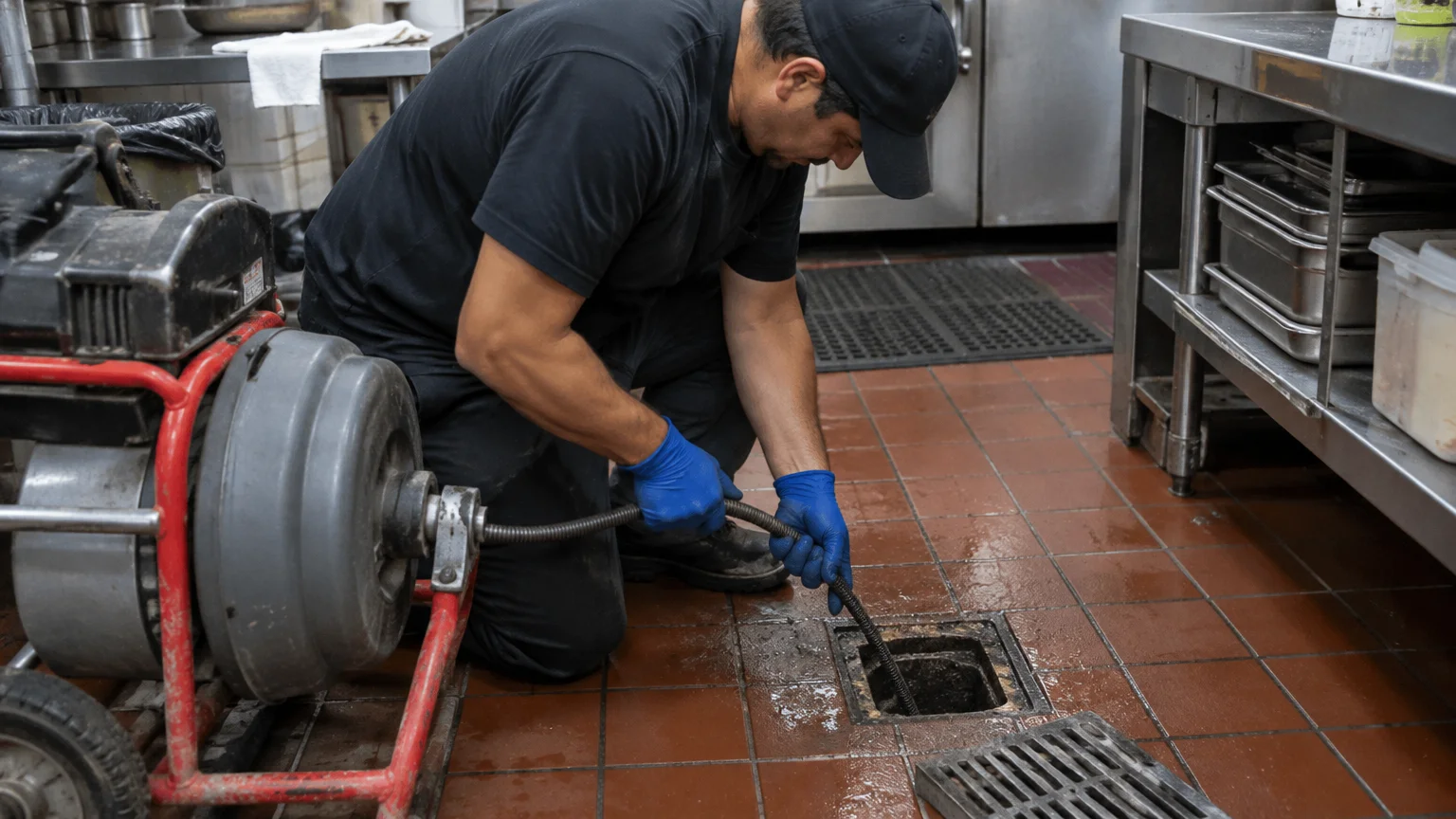
Drain cleaning equipment should match the pipe, access point, and blockage. A professional may use a drain plumbing snake for a small obstruction or water-jetting equipment for suitable heavy buildup. The right method depends on the line and its condition. A snake may open a path without removing every layer of grease.
When should a restaurant call a licensed commercial plumber?
A restaurant should call a licensed commercial plumber when drains keep blocking, many fixtures are affected, wastewater backs up, or staff cannot clear the issue safely. Professional help is also needed when a pipe, sewer line, grease interceptor, or drain connection may be damaged.
Situations that require professional drain inspection or repair
Call for help when a blockage returns after basic cleaning, sewage enters the building, or a drain problem affects food preparation areas. A plumber should also inspect unexplained smells, repeat gurgling, sudden loss of flow, and water near cleanouts or floor drains.
Home remedies such as cleaning with drain vinegar and baking soda may loosen light residue in some household drains. They are not a reliable answer for commercial grease buildup. Baking soda and vinegar should not be mixed with chemical drain cleaners. Restaurant staff should avoid testing home remedies when several fixtures are affected.
What to expect during commercial drain service
A plumber will ask about symptoms, affected fixtures, recent backups, and past cleaning. The inspection may include traps, access points, branch lines, cleanouts, and the main sewer connection. A camera or other tool may help when the blockage location is unclear.
The work depends on what the inspection finds. A small clog may need clearing, while heavy grease, damaged pipe sections, or a sewer defect may need repair. The final cost depends on parts, access, line size, damage, and urgency. It is confirmed on a quote before approved work begins.
Glen Allen Plumbing provides plumbing support for commercial properties in and around Glen Allen. This includes Innsbrook, Wyndham, Short Pump, Laurel, Lakeside, Henrico, and nearby communities. Local conditions, building age, and each property’s layout can affect the best next step.
Frequently Asked Questions
Can hot water prevent restaurant drain clogs?
Hot water may move soft residue for a short time, but it does not remove grease from the whole drain line. As water cools, grease can harden again on pipe walls. Restaurants should control waste at the source, use screens, manage used oil, and plan suitable drain cleaning.
Is drain cleaning enzyme safe for commercial kitchens?
Drain cleaning enzymes may break down some organic material, but they do not solve every blockage. Their use must match product directions, pipe materials, local rules, and site needs. Enzymes cannot repair damaged pipes or remove a severe grease clog without proper inspection.
What should staff do during a sewer backup?
Staff should stop using affected fixtures and keep people away from dirty water. The area should be closed until it can be cleaned safely. Workers should not mix chemicals or enter a drain, pit, or confined space. A licensed plumber should inspect the cause before normal use returns.
Can a restaurant clear a small drain clog without a plumber?
Staff can remove visible debris, clean a drain screen, and wipe grease from reachable surfaces. They should not take apart deep pipework, use harsh chemicals, or work on a main sewer line. A licensed plumber is needed when the clog returns, affects several fixtures, or creates a health risk.
What causes drain odors after cleaning?
Odors may come from trapped food, grease left in the line, a dry trap, poor venting, or a sewer connection issue. Cleaning the visible drain cover may not remove the source. Repeat smells should be checked, especially when they occur with slow flow or gurgling.
Key takeaways
- Grease and food waste are leading causes of commercial drain clogs.
- Hot water may move grease but does not remove it for good.
- Drain screens, waste control, and staff training reduce buildup.
- Several slow fixtures or a sewer backup may signal a main line problem.
- Repeat clogs need professional inspection, not repeated chemical treatment.
Conclusion
Restaurant drain clogs can interrupt service, damage property, and create unsafe conditions. Daily waste control is the first defense. Planned maintenance helps manage buildup before it becomes an emergency. When symptoms return or several drains are affected, professional inspection can find the cause. Restaurant operators in Glen Allen can protect service by acting early.
If you are not sure what you are dealing with, it is worth having someone look at it before it turns into a bigger job. Get in touch with Glen Allen Plumbing today and we will tell you where you stand.