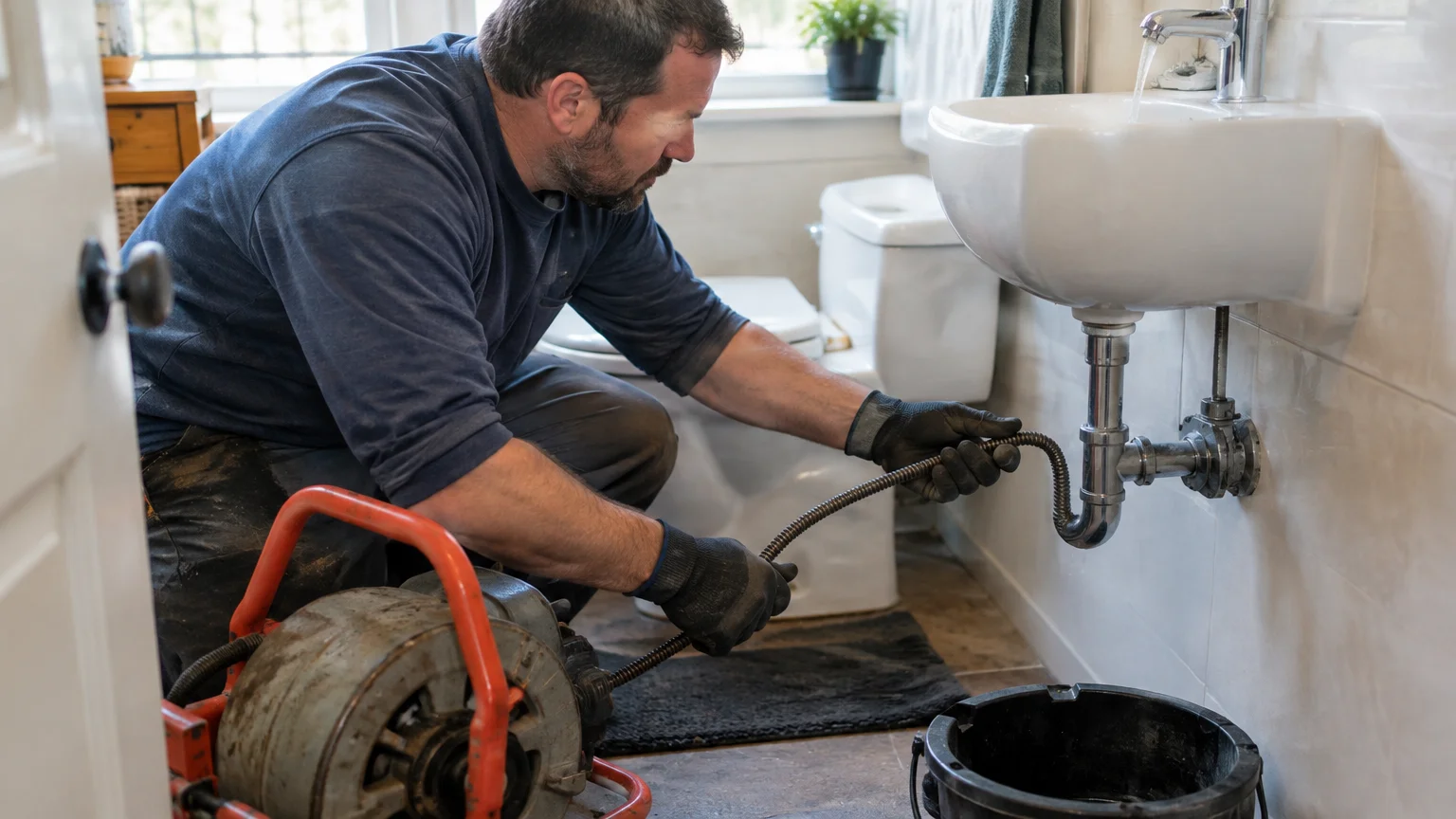
What is a plumbing snake? It is a flexible cable that clears many clogs inside drain pipes. The cable moves through the pipe, reaches the blockage, and breaks it apart or pulls it out. A small snake may help with a simple drain problem, while deeper damage needs a licensed plumber from Glen Allen Plumbing.
Table of Contents
- What Is a Plumbing Snake?
- How Does a Plumbing Snake Work?
- What Types of Plumbing Snakes Are Available?
- When Should You Use a Plumbing Snake?
- How Do You Use a Plumbing Snake Safely?
- What Can a Plumbing Snake Not Remove?
- How Can You Prevent Recurring Drain Clogs?
- Frequently Asked Questions
- Key Takeaways
- Conclusion
What Is a Plumbing Snake?
A plumbing snake is a long, flexible tool for clearing blocked drains. It is also called a drain auger. The tool has a cable that travels inside the pipe. A handle, drum, or motor turns the cable as it moves forward.
A snake does not melt a clog like chemical drain cleaner. Instead, its tip pushes through the blockage, breaks it apart, or catches material. This lets water move through the pipe again. Snakes can help with many sink, tub, shower, and toilet clogs.
How a plumbing snake clears a blockage
The cable follows the open space inside a drain. When the tip reaches the clog, the user turns or powers the cable. The tip may pierce soft material, hook hair, or loosen grease and soap. Water can then pass through the open space.
A snake may only make a small path through the clog. It may not clean the whole pipe wall. If the drain blocks again soon, the line may have heavy buildup, tree roots, or a damaged pipe.
The main parts of a drain snake
Most drain snakes have a cable, a handle or motor, and a working tip. Some have a drum that stores the cable. Larger machines may have a foot switch and guide tube.
Cable size matters. A small cable fits narrow household drains. A larger cable is made for wider pipes and harder blockages. The wrong size can harm a fixture, trap, or pipe. Always check the tool guide before use.
How Does a Plumbing Snake Work?
A plumbing snake sends a turning cable into a drain until it reaches a blockage. The cable then breaks, loosens, or catches the material. The user must control its pressure and speed. Too much force can harm the pipe or fixture.
How the cable reaches and breaks through clogs
The user feeds the cable into the drain a little at a time. Turning the handle helps the tip pass bends in the pipe. Resistance may mean the cable has reached a clog, bend, or fitting.
Do not force the cable. Gentle pressure and steady turning usually work better. When the tip enters the clog, the cable may move farther into the pipe. The user can then work it back and forth to open the drain.
Some tips look like corkscrews. They can grab hair and soft waste. Other tips bore through material or open a wider path. A professional chooses the head based on the pipe size and clog type.
Manual, drill-powered, and motorized drain snakes
A manual drain snake uses hand power. It may work well for small clogs near a sink, tub, or shower. A drill-powered model turns faster, but the extra force can damage fittings or pipes.
A motorized drain machine is made for deeper or larger blockages. It has more power and often uses a longer cable. These machines can be heavy and hard to control. They can also expose users to dirty water, sharp cable movement, and splashback.
A homeowner may not need a professional for a simple clog. For a stubborn blockage, repeated backup, or unknown pipe condition, professional Drain Cleaning Services are safer. Glen Allen Plumbing helps property owners choose a method without guessing at the cause.
What Types of Plumbing Snakes Are Available?
Plumbing snakes come in many sizes and designs. The best choice depends on the fixture, pipe size, clog location, and blockage material. A small hand tool cannot replace equipment made for a sewer line.
When to use a hand auger or sink snake
A hand auger is a small manual snake for short, narrow drain lines. It may help with hair, soap, and light food waste. It is often used at bathroom sinks, tubs, and showers.
A sink snake can help when the trap is easy to reach. A trap is the curved pipe below a sink. It holds water and helps stop sewer gases from entering the room. It can also collect waste.
A homeowner may remove and clean an easy-to-reach trap. Use a bucket and cloth to control water. If the trap is stuck, cracked, or hard to reach, do not force it. Forcing it may cause a leak.
When a toilet auger or drum machine is more suitable
A toilet auger is made for toilet bowls and their built-in trap. It has a cover that helps protect the porcelain. A standard sink snake may scratch the bowl or fail to follow its curved passage.
A drum machine suits longer drain runs and tougher clogs. It may be used for main drains, commercial lines, or repeated backups. These tools need training and protective gear.
The wrong snake can push a clog deeper or become stuck. It can scratch a fixture, harm an old pipe, or break a weak joint. Choose a tool that fits the job, not simply the strongest one.
When Should You Use a Plumbing Snake?
A plumbing snake is most useful when one fixture drains slowly or stops because of a soft clog. It may help when a plunger does not solve the problem. Identify the affected drain before using any tool.
Drain problems a snake may solve
A snake may remove hair from a shower drain, food from a kitchen sink, or paper from a toilet. It may also clear soap near a tub drain. These problems often affect one fixture and may improve after the blockage is removed.
Useful signs include:
- One sink, tub, or shower drains slowly.
- A toilet bowl rises but does not overflow.
- Water backs up at only one fixture.
- A plunger helps the drain for a short time.
- Debris entered the drain before the blockage began.
Never mix chemical drain cleaners with other products. They can create harmful fumes and may remain in the pipe when a snake enters. Tell the plumber about any chemical used in the drain.
Signs the blockage may be deeper in the plumbing system
Several slow fixtures often point to a shared drain problem. Gurgling sounds, sewer smells, or water rising in a lower fixture can also signal a deeper clog. The issue may involve a building drain or sewer line, not one sink trap.
A blocked drain plumber may need professional tools to inspect the line. Repeated backups can point to tree roots, pipe damage, or heavy scale. A snake may open the line for a short time without fixing the main cause.
Emergency plumbing help matters when sewage enters the home, wastewater spreads across floors, or a backup threatens electrical equipment. Limit water use when needed. Avoid touching contaminated water.
How Do You Use a Plumbing Snake Safely?
A homeowner may use a small manual snake for a simple, reachable clog. Safe use requires the right tool, slow movement, and skin and eye protection. A professional should handle powered machines, deep lines, and uncertain pipe conditions.
Steps for snaking a household drain
- Remove standing water when possible and protect the work area.
- Put on gloves and eye protection before opening the drain.
- Remove the stopper or strainer without forcing it.
- Feed a small cable section into the drain.
- Turn the handle with gentle forward pressure.
- Pull the cable back slowly when resistance feels strong.
- Clean the cable and repeat only if the clog loosens.
- Run water slowly and check for leaks around the fixture.
Keep the cable controlled at all times. Do not push its full length into a pipe without knowing where it is going. Wash, dry, and store the cable safely after use.
Common mistakes that can damage pipes or fixtures
Forcing the cable is a common mistake. It can bend the cable, break a fitting, or push the clog farther into the line. A drill at high speed can create the same problem.
Do not snake a drain after pouring in strong chemical cleaner. The cable may carry the chemical back toward you. Also avoid removing parts that are hard to reseal.
Stop if the tool hits hard resistance, the pipe leaks, or the fixture moves. These signs call for professional help. Glen Allen Plumbing serves Glen Allen and nearby communities, including Innsbrook, Wyndham, Short Pump, Laurel, Lakeside, and Henrico. Its team helps with drain and plumbing problems that need more than simple upkeep.
What Can a Plumbing Snake Not Remove?
A plumbing snake cannot repair a collapsed pipe or replace a broken fitting. It may also fail against tree roots, solid mineral scale, or a blockage caused by structural damage. Opening the drain does not repair the reason for the backup.
Blockages caused by tree roots, collapsed pipes, or heavy buildup
Tree roots can enter small openings in underground sewer lines. They may catch paper and waste as water passes. A snake can sometimes make a narrow path, but roots may return unless the damaged line receives proper care.
A collapsed pipe blocks water because the pipe no longer gives water a clear path. Heavy buildup can also shrink the opening over time. Old metal pipes may have rust, scale, or rough inner walls that collect waste.
Signs of a structural problem include repeated clogs, sewer smells, wet ground near a sewer line, and several fixtures backing up together. These problems need a diagnosis before repair work begins.
When drain cleaning or camera inspection is needed
Drain cleaning uses professional equipment to remove more buildup than a small household snake. A camera inspection sends a small camera through the line. It shows the location and condition of a blockage without guesswork.
A licensed plumber may suggest an inspection when the problem keeps returning. The plumber may also check cleanouts, pipe connections, and the main sewer line. Sewer Line Repair may be needed when the camera shows a break, offset, or collapse.
The next step depends on the pipe material, access, damage, and location. A written quote should confirm the recommended work before repairs begin. Plumbing costs can vary because each property and blockage is different.
How Can You Prevent Recurring Drain Clogs?
The best way to prevent clogs is to keep solids, grease, hair, and harsh materials out of drains. Good habits protect household pipes and shared plumbing lines. Prevention cannot repair a damaged or poorly graded pipe.
Everyday habits that help keep drains flowing
Do not put cooking grease, oil, coffee grounds, bones, or fibrous food scraps in kitchen sinks. A strainer can catch larger pieces before they enter the pipe. Let grease cool and place it in a suitable container.
Bathroom drains need regular hair removal. A drain cover can catch hair before it reaches the trap. Toilets should receive only human waste and toilet paper. Wipes, paper towels, cotton products, and cleaning cloths can block pipes even when labels claim they are flushable.
Helpful habits include:
- Clean sink and tub strainers often.
- Remove visible hair before it enters the drain.
- Flush kitchen lines with suitable amounts of hot water.
- Keep food scraps out of garbage disposals.
- Do not pour paint, chemicals, or oil into drains.
- Watch for slow flow and gurgling sounds.
When to call a licensed plumber for persistent problems
A licensed plumber should inspect a drain when clogs return, several fixtures slow down, or sewage backs up. Professional help is also wise when the property has old pipes, unknown repairs, or a suspected sewer issue.
Tenants should report recurring drainage problems to the owner or manager. Investors and first-time buyers may want a plumbing inspection before making a major property decision. Early checks can reveal issues that are not visible at a fixture.
Homeowners can rely on Glen Allen Plumbing for guidance on blocked drains, sewer concerns, and related plumbing repair. Local conditions, pipe age, and property layout can affect the safest plan. Good plumbing advice can prevent a small clog from becoming a larger problem.
Frequently Asked Questions
Is a plumbing snake the same as a drain auger?
Yes. Plumbing snake and drain auger are common names for a flexible cable tool used to clear drain blockages. Some augers are small and hand powered. Others are large, motorized machines for longer pipes. The name does not always show the tool’s size or power.
Can a plumbing snake damage a pipe?
Yes, incorrect use can damage pipes, joints, traps, and fixtures. Excess force, high drill speed, or the wrong cable can cause problems. Old or weak pipes need extra care. Stop when resistance feels unusual instead of forcing the tool.
Should a homeowner snake a clogged toilet?
A homeowner may use a toilet auger for a simple toilet blockage. A standard drain snake is not the best choice because it may scratch porcelain or miss the toilet trap. If the toilet keeps backing up, several fixtures are affected, or sewage appears, call a licensed plumber.
Why does a drain clog again after snaking?
Snaking may open a path without removing all the buildup. The clog may also come from tree roots, a damaged pipe, or a problem farther down the line. Repeated blockages need deeper inspection. Professional drain cleaning or a camera check may find the cause.
When should a plumber handle drain cleaning?
A plumber should handle drain cleaning when the blockage is deep, severe, or recurring. Professional help is also needed for sewage backups, several slow drains, suspected pipe damage, or a chemical-filled drain. Trained workers have equipment for larger lines and can lower the risk of damage.
Key Takeaways
- A plumbing snake uses a flexible cable to reach and clear drain clogs.
- Small manual snakes can help with simple, reachable household blockages.
- Toilet augers protect toilet bowls better than general drain snakes.
- Repeated backups may point to roots, heavy buildup, or damaged pipes.
- A licensed plumber should inspect deep, recurring, or sewage-related problems.
Conclusion
A plumbing snake can solve some common drain problems when the clog is soft, nearby, and easy to reach. It is not a cure for collapsed pipes, tree roots, or serious sewer damage. Careful use protects fixtures and pipes, while repeated problems need a proper inspection.
For drain concerns Glen Allen Plumbing can help identify the next safe step. Contact us to discuss a blocked drain, sewer concern, or plumbing problem that has not stayed fixed.