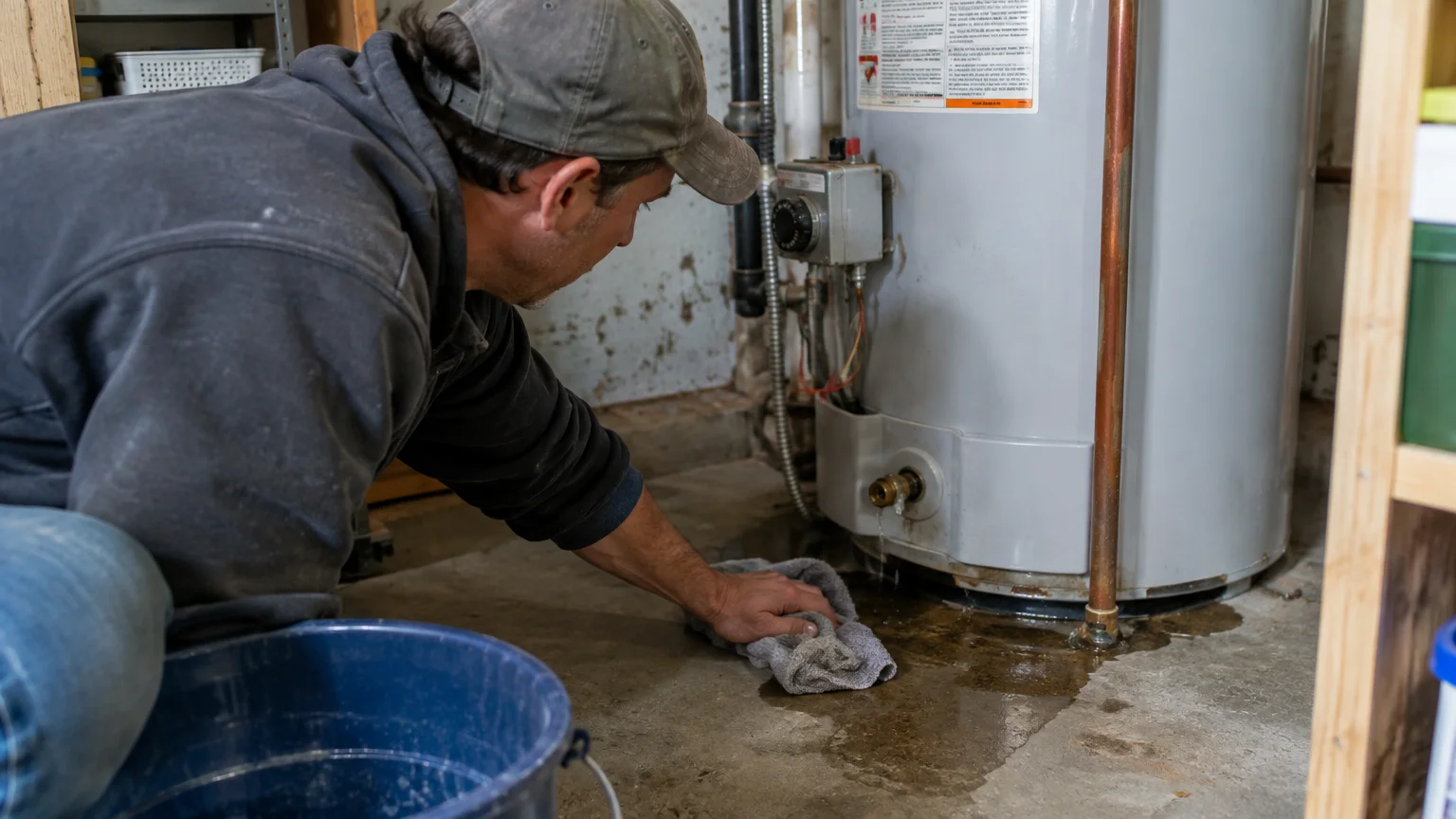
A water heater leaking from bottom needs prompt attention. The water may come from a valve, pipe, fitting, or failed tank. Shut off the water and energy supply only when safe. Then check the source without opening the unit. Glen Allen Plumbing can inspect leaks that continue or spread.
A small puddle can become a major home repair problem. Water may move under floors or inside walls before damage is clear. The first step is to limit water flow and stay away from unsafe electrical or gas parts.
Table of Contents
- What should you do when a water heater is leaking from the bottom?
- Why is water coming from the bottom of a water heater?
- Can a water heater tank leak from the bottom?
- How can you tell where a water heater leak is coming from?
- Can a leaking water heater be repaired?
- Should you repair or replace a water heater leaking from the bottom?
- What should you expect from professional water heater service?
- Frequently Asked Questions
What should you do when a water heater is leaking from the bottom?
Start by keeping people and pets away from the area. Move boxes and stored items away from the water if you can do so safely. Do not step into standing water near electrical parts. A wet floor can hide a serious electrical danger.
How to shut off the water and power safely
Find the cold-water pipe that enters the top of the tank. Turn its shutoff valve clockwise until it stops. If that valve does not work, you may need the main water shutoff for the home. Open a hot-water tap for a short time only if there is no burn risk.
For an electric water heater, turn off the matching breaker. For a gas water heater, set the control to the maker’s safe setting. Close the gas supply only when you can do so safely. Never work on gas controls, wires, burners, or flue parts without proper training.
When a bottom leak requires urgent plumbing help
Prompt help is wise when water is spreading, the tank is bulging, or the leak is strong. It is also needed when the shutoff will not stop the flow. A gas smell, burning smell, sparks, or wet electrical parts needs immediate attention. Leave the area and contact the proper emergency service if gas may be escaping.
Glen Allen Plumbing helps property owners with water leaks and other plumbing problems. You may wipe up a small amount of water after the system is safely isolated. Do not remove covers, open gas controls, or drain a hot tank without clear instructions.
Why is water coming from the bottom of a water heater?
Water at the bottom does not always mean the tank has failed. It may come from a drain valve, a temperature and pressure relief valve, a pipe joint, or water running down the outside. The highest wet point often gives the best clue about the source.
Leaking drain valve or temperature and pressure relief valve
The drain valve sits near the lower part of many storage tanks. It may drip when it does not close fully or when its seal has worn out. A cap is not a lasting repair. It may hide a damaged valve while the leak continues.
A temperature and pressure relief valve is often called a T&P valve. It protects the tank from unsafe heat or pressure. It may send water through a connected discharge pipe. Never block, plug, or remove that pipe. A relief valve that keeps releasing water needs professional testing.
Loose connections, corrosion, and damaged fittings
Water may also come from the cold-water inlet, hot-water outlet, flex connector, shutoff valve, or nearby pipe. A loose connection may be repaired, but rust can weaken the pipe or fitting. Water can travel along insulation or the tank shell, making the bottom look like the source.
Hard water minerals may affect valves and fittings over time. Condensation can also form when cold water enters a warm room or tank. This moisture may collect below the heater without a failed part. Dry the area and watch it closely, but arrange an inspection if water returns.
Can a water heater tank leak from the bottom?
Yes. A storage tank can leak from the bottom when rust has damaged its inner lining or steel shell. Replacing an outside valve will not stop a leak in the tank itself. The tank holds water under pressure, so a damaged shell is not a simple patch job.
How internal tank corrosion causes permanent leaks
Most tank water heaters have a protective lining and an anode rod. An anode rod is a metal part that rusts before the steel tank does. Over time, the rod may wear away. The tank then has less protection from water damage.
Rust often starts inside where it cannot be seen. It may later cause rusty water, wet insulation, or a small hole. Water may collect under the outer jacket and appear only at the base. Anode Rod Replacement Water Heater service may help protect a sound tank, but it cannot restore a tank shell that has failed.
Signs the storage tank has failed
A failed tank may show one or more of these signs:
- Water returns after the supply valve is shut and nearby fittings are dry.
- Rust streaks, damp insulation, or stains appear around the lower tank.
- The tank shell has corrosion, swelling, cracks, or a wet seam.
- Leaks return after valves or connectors have been repaired.
- Hot water becomes unreliable while the unit shows age or damage.
A tank leak usually calls for water heater replacement, not a lasting repair. Glen Allen Plumbing can help Glen Allen homeowners compare the current unit with suitable replacement choices.
How can you tell where a water heater leak is coming from?
You may find the source by drying the outside of the heater and checking each connection from top to bottom. Do this only after the water, gas, and electricity are handled safely. The goal is to watch the leak, not take the heater apart.
Checking the tank, valves, pipes, and surrounding area
Use a dry cloth to check the cold-water inlet, hot-water outlet, relief valve pipe, drain valve, and nearby fittings. Check the floor under the heater too. A small mirror may help you view the back without moving the unit.
Do not touch bare wires, burner parts, or hot metal. Do not force a corroded connection. If water comes from inside the tank jacket, the tank may be damaged. Photos can help a plumber understand the location before arriving, but photos do not replace an inspection.
Why condensation can look like a plumbing leak
Condensation is water that forms when moist air touches a cool surface. It may appear after the tank fills with cold water, during humid weather, or in a space with little air movement. Condensation usually leaves light moisture across several surfaces instead of one steady drip.
Dry the area and check it again after the heater runs normally. A steady stream, wet seam, or growing puddle is more likely to be a plumbing leak. Damage around the base still matters, even when the first leak seems small. A plumber for water heater repair can trace hidden moisture and check nearby pipework.
Can a leaking water heater be repaired?
Some leaks can be repaired when the tank is sound and the failed part is easy to reach. Common work includes replacing a drain valve, changing a faulty relief valve, securing a connection, or repairing nearby pipes. The right water heater repair depends on the source and the condition of nearby parts.
Leaks that may be fixed with parts or connections
A worn valve or loose connector may be a practical repair. The technician isolates the water, removes pressure when needed, replaces the part, and tests the system. They may also check for rust because a new fitting may not seal against a badly damaged pipe.
A homeowner may safely check for visible drips and clean light dust from the area. Simple upkeep includes keeping the heater easy to reach, watching for rust, and following the maker’s care guide. You do not need a professional for these safe checks. You do need one when the valve is stuck, hot, corroded, or still leaking.
When repair is unsafe or unlikely to last
Repair is usually not a sound choice when the tank shell leaks, the base is badly rusty, or many parts have failed. A patch, sealant, or clamp may hide water for a short time while pressure remains in the tank. It may also delay needed replacement and allow more property damage.
Gas, electrical, and pressure faults need trained service. Emergency Water Heater Repair may be needed when the leak cannot be controlled or hot water is lost during a serious failure. The safest choice comes from an inspection, not the size of the first puddle.
Should you repair or replace a water heater leaking from the bottom?
Repair makes sense when the tank is healthy and one replaceable part has failed. Replacement is more likely when the tank shell leaks, rust is widespread, repairs keep returning, or the unit no longer fits the property’s needs. A professional can compare safety, reliability, capacity, and future care.
How age, condition, capacity, and efficiency affect the decision
The heater’s age matters, but age alone does not decide the answer. A well-kept unit with a sound tank may need only a simple repair. A newer unit with a damaged tank may still need replacement because the tank cannot be restored.
Capacity matters too. A unit that cannot meet household hot-water demand may cause poor comfort even after a leak repair. A replacement should match the number of people, fixtures, recovery needs, fuel type, venting, and space. Local rules may also affect installation choices.
Tank versus tankless replacement considerations
A tank water heater stores hot water in an insulated vessel. It is familiar and may be simple to replace with a similar unit. It can suit homes with steady hot-water demand. A tankless water heater heats water as it moves through the unit. It saves space, but the home may need the right gas, electrical, water, and venting capacity.
Tankless hot water heater installation needs careful sizing. A unit that is too small may not serve several fixtures at once. A unit that is too large may need more system work than expected. Water Heater Installation should include safe connections, proper venting, temperature controls, and testing.
What should you expect from professional water heater service?
Professional service starts with a safety check and a careful search for the leak source. The technician should inspect the tank, valves, connections, controls, nearby flooring, and signs of hidden water damage. The findings should explain whether repair or replacement is the better choice.
Inspection, diagnosis, repair, or replacement steps
The visit may include shutting down the water and energy supply, testing visible parts, checking pressure-related valves, and looking for rust. If repair is suitable, the technician replaces the failed part and tests for leaks. If the tank has failed, the technician explains replacement choices that fit the property.
The final cost is confirmed in a quote after the work and system needs are known. Cost drivers include parts, unit size, access, damage, urgency, fuel type, and installation changes. A replacement usually involves more work than one valve repair because removal, connections, venting, and testing may all be needed.
How to prevent future leaks and water damage
Regular checks can find small problems early. Keep the area clear, look for dampness or rust, and learn where the water and energy shutoffs are. Follow the maker’s care guide and have safety parts checked when a problem appears.
A drain pan and proper discharge route may help limit damage when allowed and installed correctly. Leak alarms can provide an early warning, but they do not replace a working shutoff. Property owners should share shutoff instructions with tenants, staff, and other household members.
Key takeaways
- Shut off water and energy safely when a leak appears.
- A bottom puddle may come from a valve, fitting, pipe, or tank.
- A leaking tank shell usually needs replacement, not a patch.
- Homeowners can observe and clean safely but should not open unsafe equipment.
- Proper sizing and installation matter when choosing a tank or tankless unit.
Frequently Asked Questions
Is a water heater leaking from bottom always an emergency?
Not every small drip is an immediate crisis, but every leak needs attention. A steady flow, spreading water, gas smell, sparks, damaged wiring, or failed shutoff requires urgent help. Isolate the system only when safe, protect the area, and avoid hot, electrical, or gas parts.
Can a homeowner fix a leaking water heater valve?
A homeowner can check for a visible drip and see if the supply valve is closed. Replacing a valve involves pressure, hot water, and sometimes nearby gas or electrical equipment. It is safer to use a qualified plumber when the valve is stuck, rusty, hot, or still leaking after isolation.
How long can a leaking water heater keep working?
There is no safe set time. A small fitting leak can worsen without warning, while a tank leak means the pressure vessel has failed. Continued use may damage floors, walls, or electrical parts. Handle the water and energy supply safely, then arrange prompt professional diagnosis.
Is a leaking water heater worth repairing?
It may be worth repairing when the tank is sound and the problem is a replaceable valve, connector, or pipe fitting. Replacement is more suitable when the tank shell leaks, rust is widespread, or failures keep returning. The best choice depends on condition, capacity, safety, and future reliability.
Who can help with a leaking water heater in Glen Allen?
Glen Allen Plumbing provides local guidance for water heater leaks, repairs, and replacement decisions in the surrounding Glen Allen area. This includes Innsbrook, Wyndham, Short Pump, Laurel, Lakeside, Henrico, and nearby communities. A technician can identify whether water comes from a valve, fitting, pipe, or tank and explain the next safe step.
Conclusion
A water heater leaking from the bottom should never be ignored. The cause may be simple, such as a loose connection, or serious, such as a failed tank. Safe shutoff steps, careful observation, and timely service can limit damage and help property owners choose a lasting repair or replacement.
Contact us to arrange professional help for a leaking water heater in Glen Allen.