Low water pressure in house plumbing can come from a closed valve, blocked fixture, hidden leak, bad pressure regulator, or supply issue. One weak faucet often has a local blockage. Weak flow at every fixture may point to pipes, pumps, tanks, or the public water supply. These checks help you find the likely cause safely.
A sudden change needs attention, especially when several fixtures lose flow together. A slow shower may have a simple cause, but damp walls, noisy pipes, or cloudy water can signal a deeper fault. The steps below help homeowners, tenants, and property owners decide what to check and when to call Glen Allen Plumbing.
Table of Contents
- What causes low water pressure in a house?
- How can I tell where the pressure problem is coming from?
- What should I check first when water pressure drops?
- Can a clogged pipe or fixture cause low water pressure?
- How do pressure regulators and water supply systems affect pressure?
- Can I fix low water pressure myself?
- When should I call a plumber about low water pressure?
- Frequently Asked Questions
- Key takeaways
- Conclusion
What causes low water pressure in a house?
Low pressure can begin at the water supply, inside the plumbing, or at one blocked fixture. Common causes include closed shutoff valves, clogged aerators, damaged pipes, leaks, pressure regulator trouble, and changes in the public water system. First, find out whether the issue affects one outlet or the whole property.
Common household and municipal causes
A shutoff valve may have moved during repair work. A partly closed valve limits water flow. A pressure-reducing valve can also wear out with age. This valve lowers incoming pressure before water reaches sinks, showers, and other fixtures.
Older metal pipes may become narrow inside. Rust and mineral deposits can build up over many years. A leak can also use water before it reaches a tap. A failing pump, low tank level, or blocked filter can cause the same weak-flow sign.
The public supply may have lower pressure during repairs or high demand. A nearby main break can affect many homes. Property managers and water providers may know about planned work. Glen Allen Plumbing can help Glen Allen property owners tell a supply issue from a private plumbing fault.
How pressure problems differ from flow problems
Pressure is the force that pushes water through a pipe. Flow is the amount of water that reaches an outlet over time. A pipe may have normal pressure while a blocked screen limits the flow from one faucet.
This difference matters during testing. Water that starts strong but weakens when another fixture opens may point to a supply or pipe restriction. If only one shower or faucet is weak, the cause is more likely near that fixture.
How can I tell where the pressure problem is coming from?
The location of weak flow gives an important first clue. Test a bathroom faucet, kitchen faucet, shower, and outdoor spigot. Notice whether cold water, hot water, or both are affected.
Checking whether one fixture or the whole house is affected
Run one fixture at a time. Then open two fixtures and watch the change. If only one outlet is weak, clean its aerator or showerhead first. A blocked cartridge or stop valve may also limit that fixture.
If every outlet is weak, check the main shutoff valve. Ask nearby homes whether they have the same problem. Tenants should report the change to the property owner or manager. A sudden whole-house drop needs more care than one slow tap.
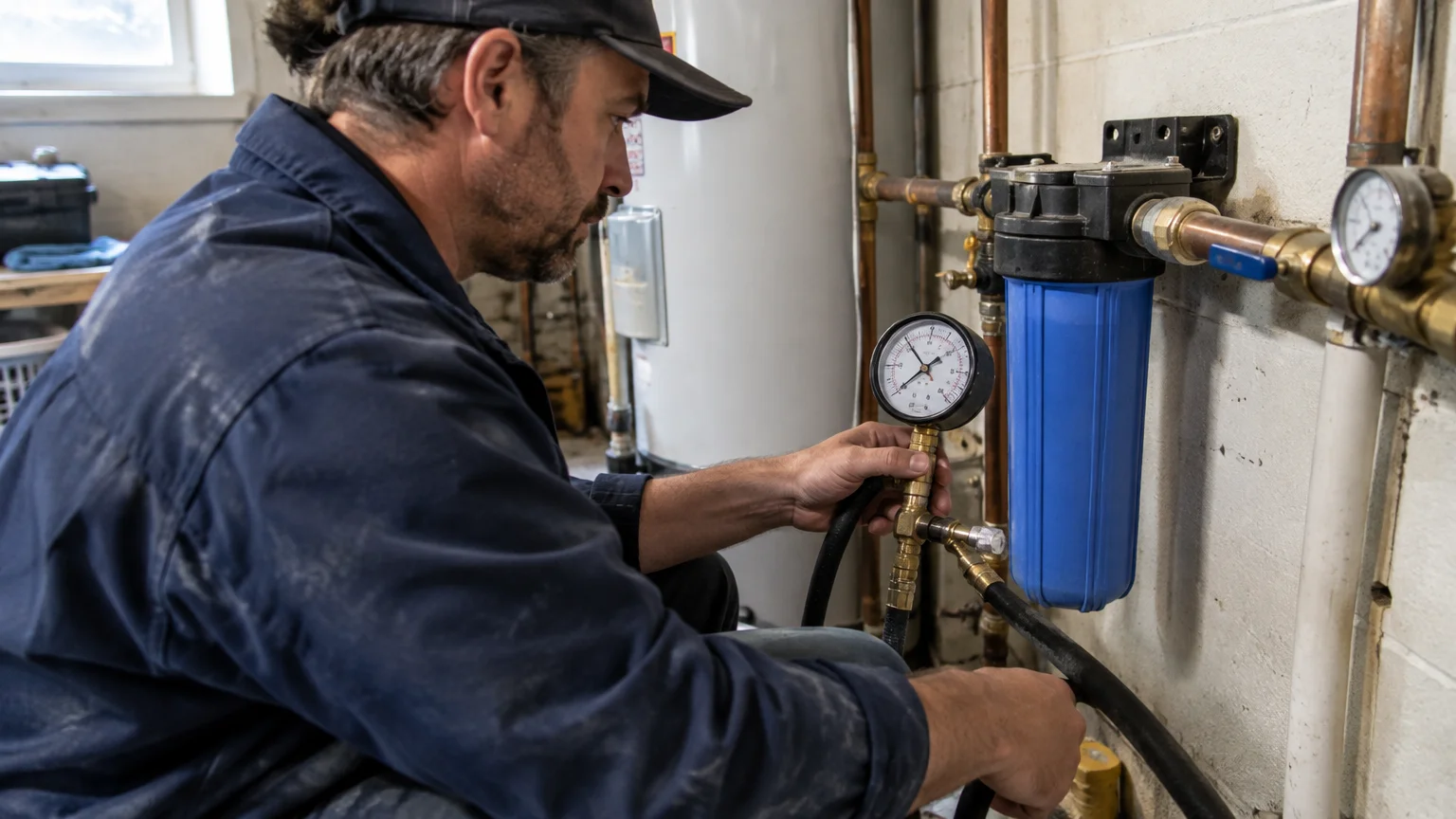
A pressure gauge can help a trained person compare static pressure with flow pressure. Static pressure is the reading when no fixture is open. Flow pressure is the reading while water is moving. A large drop can point to a restriction or failing part.
Signs of a private plumbing issue versus a water-supply issue
A private issue may affect only one home. It may cause dripping sounds, wet cabinets, stained ceilings, or water meter movement. Pressure may also change sharply when another fixture runs. A supply issue may affect several nearby buildings at once.
Do not open a street-side meter box or change public equipment. Those parts may belong to the water provider. A licensed plumber can test the home side of the system. The plumber can also explain which repairs belong to the property owner.
What should I check first when water pressure drops?
Start with simple checks before removing parts or opening walls. Make sure the main shutoff valve is open. Then inspect easy-to-reach fixtures and pipes. Stop if water is near electrical equipment or a pipe looks cracked.
Inspecting shutoff valves, faucets, and visible pipes
Look under sinks, behind toilets, near the water heater, and where the main line enters. A small handle should usually be fully open. Do not force an old valve. It may break and release water.
Do not turn a valve that belongs to a shared building or public system. Ask the property manager if you are unsure. This is especially important for tenants and owners of units in multi-family buildings.
Remove a faucet aerator only if it comes off easily. Rinse away grit and replace each part in the same order. A clogged showerhead may need soaking and rinsing. A damaged cartridge often needs replacement by someone who knows the fixture.
Check visible pipes for wet spots, green marks, rust, or stains. Listen for water when every fixture is closed. These signs may point to a hidden leak instead of a pressure fault.
Checking for leaks, clogs, and recently changed fixtures
Think about what changed before the pressure dropped. Recent plumbing work, a new faucet, a water heater repair, or valve replacement may have left grit in a line. Building work can also disturb sediment that later blocks screens.
A toilet that keeps running wastes water and may reduce flow in some systems. Common causes include a worn flapper, wrong chain length, or bad fill valve. A small adjustment may help, but constant refilling should not be ignored.
If the water meter moves while all water is off, the property may have a leak. Leaks & Burst Pipes need quick attention when water is visible or damage is spreading. Glen Allen Plumbing serves Glen Allen and can check warning signs before they become a larger repair.
Can a clogged pipe or fixture cause low water pressure?
Yes. Mineral buildup, rust, sediment, and damaged parts can narrow the path where water flows. The blockage may be inside an aerator, showerhead, cartridge, valve, filter, or older supply pipe.
Mineral buildup in aerators, showerheads, and valves
Small screens catch grit before it reaches the outlet. Over time, these screens can fill with sand or mineral deposits. This often makes one faucet slow while nearby fixtures work well.
Showerheads may collect deposits around their small openings. Cleaning a removable head is often safe when the fitting is in good shape. Tenants should follow lease rules and avoid changes that may damage the fixture.
If cleaning does not help, the blockage may be inside the cartridge or supply valve. Do not force a stuck part. Old fittings can break and release water quickly.
When corrosion or pipe damage restricts water flow
Corroded pipes may become narrow inside even when the outside looks fine. Flakes can move through the system and block screens. A pipe may also bend, collapse, or become damaged during building work.
These problems often affect more than one fixture. They may also cause discolored water, leaks, banging sounds, or repeated clogs. Pipe replacement may be needed when the blockage is inside an enclosed section.
A professional can compare readings at several points and inspect exposed pipework. water heater repair may matter when weak flow affects only hot water. A restricted heater screen or inlet valve can limit hot-water delivery.
How do pressure regulators and water supply systems affect pressure?
Pressure regulators, tanks, pumps, filters, and public mains all affect water flow. A fault in one part can create weak or changing pressure. The right repair depends on testing rather than guessing.
What a pressure-reducing valve does
A pressure-reducing valve lowers incoming pressure. This helps protect household pipes and fixtures. Its inside parts may wear, stick, or collect debris. When that happens, pressure may stay low across the home.
The valve may be near the main shutoff or where the service line enters. Do not adjust it without proper testing. Too much pressure can harm fixtures. Too little pressure can make normal tasks hard.
A plumber may test pressure before and after the valve. This can show whether the regulator is limiting flow. The same test may find a blocked filter or another control problem.
How tanks, pumps, and municipal supply conditions can matter
Homes with storage tanks or booster pumps depend on these parts for steady service. A low tank level, blocked inlet, electrical fault, or pump problem may reduce flow. Water Tanks need regular checks so their valves and connections stay reliable.
Municipal conditions can change during main repairs or high-demand periods. Ask nearby residents whether their pressure changed too. If several homes have the same issue, the water provider may need to inspect the supply.
Emergency Plumbing is right when a pressure drop comes with a burst pipe, flooding, or fast leak. Shut off the main supply when safe. Stay away from damaged electrical equipment and wet outlets.
Can I fix low water pressure myself?
Homeowners can safely clean a removable screen, check an easy-to-reach valve, and look for visible leaks. They do not need a professional for these simple checks. They should not open pressurized equipment, change public supply parts, or work near gas and electrical hazards.
Simple upkeep can solve a local blockage. It cannot safely fix hidden leaks, damaged pipes, bad regulators, or pump faults. Do not let basic checks delay urgent help.
Safe troubleshooting steps for homeowners and tenants
Use this order:
- Check whether one fixture or the whole property is affected.
- Confirm that accessible shutoff valves are fully open.
- Clean a removable aerator or showerhead if it is safe.
- Look for wet spots, stains, running toilets, and odd sounds.
- Ask the manager or water provider about wider supply problems.
Turn off the main valve if a pipe sprays or a leak spreads. Dry the area only when safe. Tenants should report the issue quickly instead of making permanent repairs without approval.
Slow drains do not usually cause low water pressure. Still, blocked drains, gurgling pipes, and backups can point to other plumbing trouble. Drain Cleaning may help with those separate problems, but it will not repair a pressure regulator or supply pipe.
Repairs that require a licensed plumber
A licensed plumber should inspect hidden leaks, damaged pipes, pressure regulators, pumps, and whole-house pressure faults. Professional help is also needed for soldering, cutting pipe, opening walls, or work near gas appliances.
Do not test for gas leaks with a flame. A gas smell means leaving the building and calling the gas utility or emergency services from a safe place. Water pressure work should never create a new safety risk.
Water heaters can also need expert care. Weak hot water may call for water heater repair, while an old or badly damaged unit may need water heater replacement. A plumber can test the unit before you decide on the next step.
When should I call a plumber about low water pressure?
Call a plumber when the problem affects the whole property, returns after cleaning, or comes with leaks or pipe damage. Prompt help is also wise when the home has old pipes, a tank, a pump, or a pressure regulator that has not been tested.
Warning signs of leaks, pipe damage, or serious system faults
Call for professional help when you notice:
- Water stains, damp walls, soft floors, or mold-like smells
- A meter that moves while every fixture is closed
- Sudden pressure loss throughout the property
- Rusty water, repeated clogs, or flakes in faucet screens
- Loud banging, hissing, or water sounds behind walls
- A burst pipe, flooding, or water near electrical equipment
A pressure problem that begins after plumbing work also needs review. Debris may be trapped in a valve. A connection may also be partly closed. Quick testing can stop the issue from affecting more fixtures.
What a professional pressure diagnosis may include
The plumber may ask when the problem began and which fixtures are weak. They may check static and flowing pressure, inspect valves, and examine visible pipes. They may test the regulator and compare hot-water flow with cold-water flow.
They may also look for leaks near water heaters, tanks, fixtures, and exposed supply lines. If drains are slow too, they can explain whether that is a separate issue. Good testing helps prevent the wrong repair.
The repair depends on the cause, access, parts, damage, and urgency. A blocked screen is usually less involved than a failed regulator or hidden pipe. The plumber should explain the findings and confirm the work in a quote before repairs begin.
Frequently Asked Questions
Why does water pressure drop in only one faucet?
One weak faucet usually has a local blockage. The aerator, cartridge, stop valve, or flexible connector may contain grit or mineral buildup. Rinsing an aerator can help when it comes off safely. If the problem remains, a plumber can inspect the fixture without assuming the whole house has low pressure.
Can a running toilet cause low water pressure?
A running toilet usually wastes water instead of causing a lasting pressure fault. It can still affect flow in some homes when the supply is limited or several fixtures run together. Check the flapper, chain, and fill valve. If the toilet keeps running after a simple adjustment, arrange a repair.
How can someone check for a water leak?
Close every faucet and stop appliances that use water. Watch the water meter if you have safe access. Movement may suggest a leak, but it will not show where the leak is. Wet spots, stains, musty smells, and hissing sounds also call for professional testing.
Is low water pressure a plumbing emergency?
Low pressure alone is not always an emergency. It becomes urgent with a burst pipe, fast leak, flooding, unsafe electrical conditions, or sudden whole-house failure. Shut off the water when safe. Stay clear of hazards and seek Emergency Plumbing help when damage is active.
Does a water heater cause weak water pressure?
A water heater may cause weak flow on the hot side only. Sediment, a restricted inlet valve, or a blocked screen can reduce hot-water flow. If cold water is also weak, the cause may be elsewhere. A plumber can test both sides and decide whether the heater needs water heater repair or replacement.
Key takeaways
- Test several fixtures to learn whether the fault is local or widespread.
- Check valves, aerators, showerheads, leaks, and recent plumbing changes.
- Do not adjust public equipment or open pressurized parts without training.
- Whole-house pressure loss may involve a regulator, pump, tank, pipe, or supply issue.
- Call a plumber when pressure loss comes with leaks, damage, flooding, or repeat failure.
Conclusion
Low water pressure can come from a small blocked screen or a serious pipe problem. Careful checks can show the likely source, but they cannot replace a full diagnosis when the whole property is affected. Glen Allen Plumbing helps owners and tenants understand pressure concerns and choose a safe next step.
Contact us to arrange help with persistent low water pressure.