How plumbers find gas leaks starts with safety and careful testing. A licensed plumber checks the gas system in sections, uses approved tools, and confirms the source before making repairs. These steps help find leaks near appliances, valves, joints, and hidden pipes in Glen Allen homes and businesses.
A gas leak can cause fire, an explosion, or serious illness. Anyone who smells rotten eggs, hears hissing, or feels sick should leave the area at once. The guide below explains what trained plumbers do and what people should do first.
Table of Contents
- How do plumbers find gas leaks in a home?
- What tools do plumbers use to detect gas leaks?
- What steps does a plumber take during gas leak detection?
- Where do gas leaks commonly occur in a house?
- What should you do if you suspect a gas leak?
- How do plumbers repair and verify a gas leak?
- When should you call an emergency plumber for a gas leak?
How do plumbers find gas leaks in a home?
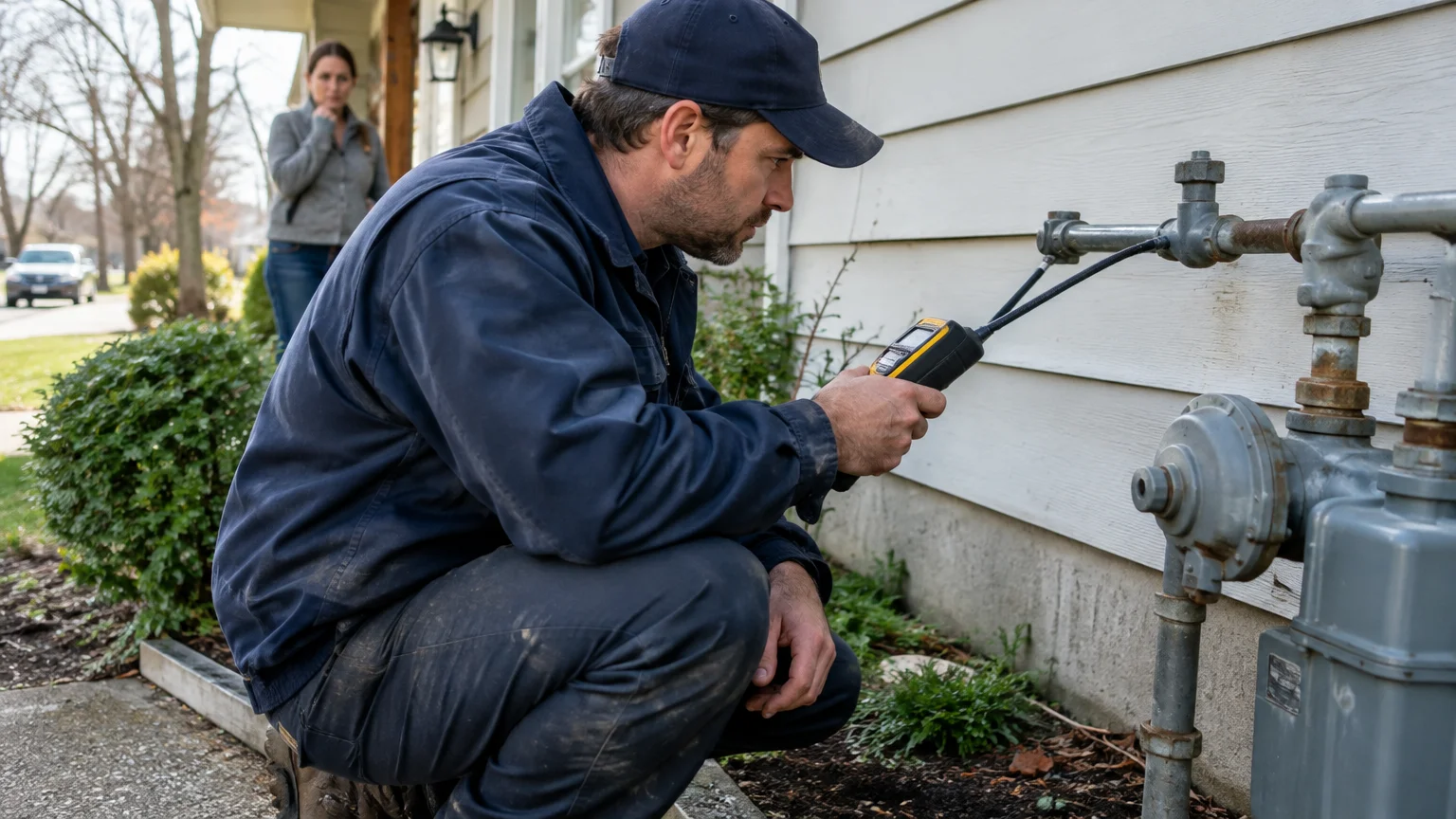
Plumbers find gas leaks by checking one part of the system at a time. They first listen and look for signs, then use tools to measure gas or pressure. A trained plumber does not depend on smell alone because air can move the odor away from the leak.
Why gas leak detection requires professional equipment
Natural gas and propane can burn when mixed with air. A combustible gas detector measures gas in the air near pipes, fittings, and appliances. A pressure test checks if a closed gas system keeps its pressure. Together, these tests help find the source instead of only finding gas in a room.
Gas work needs care around flames, switches, motors, and other spark sources. The U.S. Department of Energy advises people to leave at once when they smell gas or think there may be a leak. People should never test a suspected leak with a lighter, match, or electrical device.
How plumbers assess the property before testing
The plumber first asks what people noticed. Helpful details include a rotten-egg smell, a hissing sound, a pilot light problem, or signs of illness such as dizziness. The plumber also checks which appliances use gas and whether recent work changed the system.
Glen Allen Plumbing helps property owners understand whether a suspected gas issue needs urgent help. The inspection may include the furnace, range, water heater, fireplace, outdoor equipment, shutoff valves, and visible supply lines. The plumber then chooses a safe test plan for the property.
What tools do plumbers use to detect gas leaks?
Plumbers use more than one tool because each method gives different information. Electronic detectors find gas in the air. Pressure tests show if the gas piping loses pressure. A leak detection solution can help confirm a suspected point on an exposed connection.
Electronic combustible gas detectors
An electronic combustible gas detector senses flammable gas near a possible leak. The plumber moves it slowly around appliance connections, valves, unions, and pipe joints. The readings can guide the search when a leak is small or hidden behind a cabinet.
The detector does not replace a full inspection. Air movement can carry gas away from its source. A reading can also change when a burner, vent, or appliance runs. The plumber compares readings and checks the system in a careful order.
Pressure testing and gas-rated leak detection solution
A pressure test seals part of the system and checks whether it holds pressure during the test. A pressure drop can show that gas is escaping, but it may not show the exact spot. The plumber then separates sections or checks visible connections.
For exposed fittings, a gas-rated leak detection solution can form bubbles where gas escapes. This method can help when used by a trained person. Household soap should not replace an approved product or professional testing, especially around old fittings and sensitive equipment.
What steps does a plumber take during gas leak detection?
A plumber starts by making the area safer. The exact order depends on the smell, gas reading, building layout, and fuel type. Work should stop if conditions create immediate danger for people or the plumber.
Isolating appliances, fittings, and gas lines
The plumber may shut off the building supply or an appliance valve when it is safe. This limits the gas that can enter the space. The plumber also keeps spark sources away and may air out the area only when that can be done safely.
Next, the plumber divides the system into sections. This can show whether the problem is near one appliance or within one branch of the piping. A homeowner should not turn valves back on after a gas utility worker or emergency responder has shut them off.
Confirming the leak source and checking nearby connections
The plumber checks the suspected fitting, connector, valve, and nearby pipe. A loose connection may be easy to see. Corrosion or damage may need closer testing. The plumber also looks for movement, poor support, heat damage, and bad installation.
A confirmed leak is not always at the first place where the detector responds. Gas can move through cabinets, wall spaces, and floor openings. A skilled plumber traces the system instead of replacing the first part that seems suspicious.
Where do gas leaks commonly occur in a house?
Gas leaks often occur at connections, valves, flexible connectors, and damaged pipe sections. The risk can rise when parts are old, moved, rusty, or installed poorly. A leak can also start at an appliance that has shifted or lost a proper connection.
Appliance connections, valves, and flexible connectors
Common points include a range connector, water heater connection, furnace shutoff valve, and fireplace fitting. Flexible connectors can be damaged when bent, pinched, stretched, or exposed to heat. Moving an appliance during cleaning or remodeling can also strain a connection.
A homeowner may look for visible damage without touching the fitting. The homeowner should not tighten a gas connection, remove a connector, or test it with a flame. Any smell or hissing near an appliance calls for caution and trained help.
Pipes, joints, and concealed gas lines
Gas piping may leak at threaded joints, unions, valves, or sections damaged by rust or impact. Concealed lines are harder to find because the source may sit inside a wall, crawl space, or floor. Signs can include a returning odor, dead plants near an outside line, or a detector reading in one area.
These signs do not prove a leak. They do show why the system needs a proper check. Glen Allen Plumbing serves property owners who need guidance about gas leaks, burst leaks, water heater issues, and other urgent plumbing concerns, including Innsbrook, Wyndham, Short Pump, Laurel, Lakeside, Henrico, and nearby communities.
What should you do if you suspect a gas leak?
Leave the area quickly and avoid anything that could make a spark. Do not use light switches, phones, appliances, matches, or vehicles near the suspected leak. Once safely away, call 911 or the gas utility emergency line when needed, then arrange professional plumbing help.
Immediate safety steps for occupants
The safest first actions are simple:
- Move people and pets outside without searching for the leak.
- Avoid flames, switches, plugs, vehicles, and powered equipment.
- Do not smoke, use a flashlight, or operate a phone inside.
- Call emergency services or the gas utility from a safe location.
- Do not return until the proper authority says the property is safe.
Do not open windows or doors if doing so means moving toward the smell or touching a switch. Do not shut off the main gas valve unless it is outside, easy to reach, and the gas utility gives clear instructions. Safety comes before saving appliances or belongings.
When to leave the property and call emergency services
People should leave at once when the smell is strong, a hissing sound is present, anyone feels ill, or a detector alarms. A visible fire, damaged gas line, or suspected leak near a spark source needs emergency services. The gas utility may need to make the area safe before a plumber starts repair work.
A mild or uncertain odor still needs attention. Odor can move through a building and may not remain strongest at the source. People should not ignore a smell just because it fades.
How do plumbers repair and verify a gas leak?
A plumber repairs the failed part only after confirming the source and making the system safe. The repair may involve a fitting, valve, connector, appliance part, or approved gas pipe. The right fix depends on the damage, access, pipe type, and local rules.
Repairing or replacing faulty gas components
A plumber may replace a damaged connector, valve, joint, or pipe section. Some parts can be repaired, while others should be replaced. A professional also checks supports, clearances, shutoff access, and nearby appliance connections.
Homeowners should not patch gas piping with tape, sealant, or makeshift parts. Water-pipe repair products are not always safe for fuel gas. A licensed professional can choose approved materials and complete work that meets local rules.
Testing the system after the repair
After the repair, the plumber tests the affected section and may test the whole system. The test can include pressure checks, detector readings, and a close look at repaired connections. The plumber also checks that appliances work safely and that no new leak appears.
A repair is not complete just because the smell fades. Gas may remain in a closed space, and an appliance may have another problem. The plumber should explain what was found, what was repaired, and whether another qualified authority must restore service.
When should you call an emergency plumber for a gas leak?
An emergency plumber should be called after people reach safety and emergency services or the gas utility have been contacted as needed. Urgent signs include a strong odor, hissing, a damaged line, repeated detector alarms, or a leak near a gas appliance.
Warning signs that require immediate professional help
A homeowner should treat these signs seriously:
- A rotten-egg odor that returns or grows stronger.
- Hissing near a pipe, appliance, valve, or wall.
- A gas detector alarm or unexplained pressure loss.
- Flames that look unusual or keep going out.
- Dizziness, nausea, headache, or breathing trouble indoors.
- Physical damage to a gas line or appliance connector.
A gas leak is different from a routine plumbing repair. A homeowner may safely clean a drain, clear some surface debris, or handle simple upkeep. Gas leak testing and repair need trained help. DIY testing with a flame is never safe.
What homeowners should ask before work begins
After the property is safe, the homeowner can ask what part failed, what test confirmed the leak, and what repair is needed. The homeowner can also ask if the work needs an inspection, permit, utility release, or another licensed trade. The final cost is confirmed on a quote and may depend on parts, access, damage, and urgency.
Glen Allen Plumbing provides emergency plumbing guidance for homes, businesses, and nearby communities. Gas problems need prompt care, while other plumbing concerns such as clogs, drains, drain cleaning, and drain repair may need a different type of inspection.
Key takeaways
- Gas leak detection should use approved tools, never a flame.
- Leave at once when there is a strong odor, hissing, or illness.
- Call emergency services or the gas utility from a safe location.
- Plumbers use detectors, pressure tests, and close connection checks.
- A repaired gas system must be tested before normal use.
Frequently Asked Questions
Can a homeowner find a gas leak without a detector?
A homeowner may notice an odor, hissing, or appliance trouble, but these signs do not safely locate a leak. The homeowner should leave and call for help instead of searching indoors. A trained plumber uses approved tools and controlled tests after the area is safe.
What does a gas leak smell like?
Natural gas is usually treated with a strong smell often compared with rotten eggs. The smell may be faint, strong, or uneven because air can move gas through rooms and wall spaces. Any unexplained gas odor should be treated as a warning, even if it soon disappears.
Can a gas leak come from a water heater?
Yes. A water heater can have a problem at its shutoff valve, connector, control area, or nearby gas piping. A pilot issue or damaged connection can also cause concern. People should leave if gas is suspected and should not relight the appliance until a qualified professional checks it.
How long does gas leak detection take?
The time depends on the building size, number of appliances, pipe access, and whether the leak is visible. An exposed connection may be confirmed quickly. A leak inside a wall, crawl space, or long pipe branch may need more careful testing.
Is a gas leak always an emergency?
A suspected active gas leak should be treated as urgent because gas can ignite and harm people. A strong smell, hissing, physical damage, or illness requires immediate evacuation and an emergency call. Even an uncertain odor needs prompt advice, not home testing or delay.
If you are unsure what you are dealing with, contact Glen Allen Plumbing today for guidance about a suspected gas leak or another urgent plumbing problem. Contact us to arrange professional help in Glen Allen after the property is safe.